

Most American gin aficionados know the difference a carefully chosen spirit can make, yet only a select few truly master the Mediterranean-inspired approach that sets top-tier servings apart. Savoring premium gin is more than a casual pour—it is a journey into botanicals, craftsmanship, and intentional detail. This guide uncovers how the world’s best gins win international accolades by blending artistry with regional flavors and offers expert tips for those ready to refine their technique and present each serve at its aromatic peak.
Table of Contents
- Step 1: Select the Right Premium Gin
- Step 2: Prepare Glassware and Garnishes
- Step 3: Measure and Pour Gin Precisely
- Step 4: Add Complementary Mixers or Tonic
- Step 5: Garnish and Present for Maximum Appeal
- Step 6: Evaluate Aroma and Taste for Perfection
Quick Summary
| Main Insight | Clear Explanation |
|---|---|
| 1. Choose premium gins wisely | Focus on the gin’s botanical profile, distillation method, and production quality for the best taste experience. |
| 2. Use appropriate glassware and garnishes | Select clear glassware and complementary garnishes to enhance both the visual appeal and flavor profile of your gin. |
| 3. Measure and pour accurately | Use precise measurement techniques to respect the delicate balance of flavors in premium gin, ensuring quality servings. |
| 4. Select mixers that enhance flavor | Choose mixers that complement your gin’s unique characteristics without overwhelming its subtle nuances, like different tonic waters. |
| 5. Taste and evaluate with intention | Conduct a thorough tasting by observing, smelling, and savoring to appreciate the complexities of your chosen gin. |
Step 1: Select the Right Premium Gin
Choosing the right premium gin is the foundation of an exceptional drinking experience. When navigating the world of premium spirits, focus on understanding the nuanced characteristics that distinguish top-tier gins from standard offerings.
The key to selecting an outstanding gin lies in evaluating its botanical profile and production method. World’s best gins demonstrate that exceptional quality comes from meticulous craftsmanship and carefully curated ingredients. Look for gins that showcase a balanced blend of botanicals with clear flavor intentions. Mediterranean-style gins, like those featuring citrus and aromatic grape notes, offer particularly sophisticated taste experiences.
When exploring premium gin selections, pay attention to specific details such as distillation techniques, regional ingredients, and the distillery’s reputation. A premium gin should tell a story through its flavor profile - whether it highlights juniper, citrus, herbal, or regional botanical characteristics. Consider gins produced in small batches, which often reflect more intentional and precise crafting methods.
Here’s a comparison of common premium gin styles and their defining characteristics:
| Gin Style | Key Botanicals | Typical Flavor Profile | Best Glassware |
|---|---|---|---|
| London Dry | Juniper, citrus, angelica | Crisp, dry, herbal | Highball or tumbler |
| Mediterranean | Citrus, grape, herbs | Bright, floral, aromatic | Copa de balon |
| Contemporary | Exotic fruits, floral | Unique, sweet, innovative | Martini glass |
| Old Tom | Juniper, licorice, sweet | Mellow, slightly sweet | Coupe |
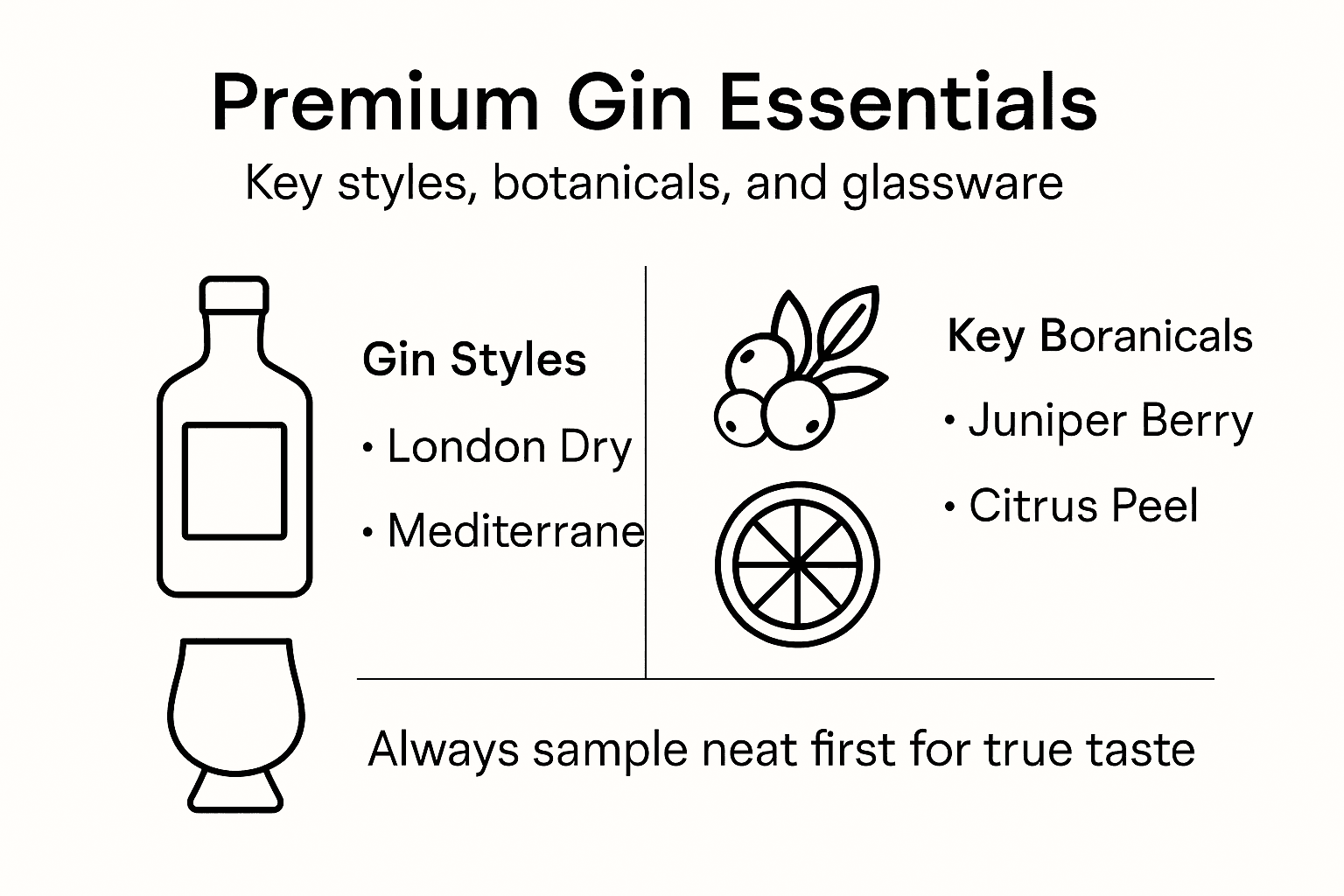
Pro tip: Always sample a gin neat before mixing to truly understand its unique flavor complexity and quality.
Step 2: Prepare Glassware and Garnishes
Elevating your gin experience starts with selecting the right glassware and preparing complementary garnishes that enhance the spirit’s complex flavor profile. This step transforms a simple drink into a sensory journey that engages multiple aspects of taste and presentation.
Careful attention to garnish preparation techniques can dramatically improve your gin serving. Choose garnishes that either harmonize or create an intriguing contrast with your gin’s botanical characteristics. For classic gin and tonic, consider citrus elements like lime or grapefruit zest, which can amplify the spirit’s inherent aromatics. Mediterranean style gins particularly benefit from garnishes that highlight their unique regional ingredients.
When selecting glassware, opt for clear glasses that showcase the gin’s clarity and allow the garnishes to be visible. A Spanish style copa de balon glass works excellently for gin and tonic, providing ample space for ice, botanical garnishes, and releasing the spirit’s intricate aromas. Always ensure your glassware is spotlessly clean and chilled to maintain the gin’s optimal temperature and presentation.

Pro tip: Slightly bruise herbs like rosemary or mint before adding them as garnishes to release their essential oils and enhance the gin’s aromatic complexity.
Step 3: Measure and Pour Gin Precisely
Measuring and pouring gin with precision is an art form that transforms an ordinary drink into an extraordinary sensory experience. The goal is to capture the delicate balance of flavors while maintaining the integrity of your premium gin.
Accurate measurement techniques are crucial for crafting the perfect gin serve. Professional bartenders rely on tools like jiggers to ensure consistent volume and flavor balance. When pouring, hold the bottle vertically and aim for a smooth, controlled stream that allows you to stop precisely. For most cocktails, a standard pour is 1.5 ounces, but this can vary depending on the specific recipe and desired strength.
Precision matters especially when working with premium gins, where each botanical nuance should be respected. Experiment with different pouring techniques, but always prioritize consistency. Tilt your glass slightly when pouring to reduce splash and foam, which can disrupt the gin’s delicate aromatics. Practice your technique to develop a steady hand that allows you to pour with confidence and accuracy.
Pro tip: Invest in a quality stainless steel jigger with clear measurement markings to ensure exact pours every single time.
Step 4: Add Complementary Mixers or Tonic
Selecting the right mixer is a crucial step in elevating your premium gin experience, transforming a simple spirit into a complex and refreshing beverage. The goal is to enhance the gin’s botanical profile without overwhelming its delicate nuances.
Gin mixer selection requires a thoughtful approach that balances flavor complexity. Classic tonic water remains the gold standard for gin and tonic, offering a crisp bitterness that complements most gin styles. However, do not limit yourself to traditional options. Explore alternatives like ginger beer for a spicy kick, elderflower tonic for a subtle floral note, or even fresh citrus juices that can highlight specific botanical elements in your chosen gin.
When mixing, pour your mixer slowly and gently to preserve carbonation and prevent excessive dilution. The ideal ratio typically ranges between 1 part gin to 2 or 3 parts mixer, depending on the gin’s strength and your personal preference. Mediterranean style gins with citrus and herbal notes pair particularly well with lighter tonics that allow their intricate flavors to shine through.
Below is a summary of recommended mixers and garnish pairings for enhancing your gin experience:
| Gin Type | Mixer Recommendation | Garnish Suggestion | Flavor Enhancement |
|---|---|---|---|
| Classic Gin | Traditional tonic water | Lime or lemon twist | Brightens citrus notes |
| Mediterranean Gin | Light tonic, elderflower | Grapefruit, rosemary sprig | Boosts herbal, citrus aroma |
| Spiced Gin | Ginger beer | Candied ginger, orange zest | Adds warmth and spicy depth |
| Herbal Gin | Soda or floral tonic | Lavender, fresh thyme | Intensifies floral elements |
Pro tip: Chill both your gin and mixer beforehand to maintain optimal temperature and prevent immediate ice melting.
Step 5: Garnish and Present for Maximum Appeal
The final step in serving premium gin transforms your drink from a simple cocktail to an artful sensory experience. Your presentation is the visual and aromatic introduction that sets expectations for the flavor journey ahead.
Expert garnish techniques elevate your gin serve beyond mere decoration. Select garnishes that complement your gin’s specific botanical profile. For Mediterranean style gins with citrus notes, consider a fresh grapefruit twist or a sprig of rosemary. Herbal gins pair beautifully with lavender sprigs or fresh thyme. The goal is to enhance aroma and visual appeal while creating a harmonious flavor interaction.
When placing garnishes, think about both aesthetic and functional elements. Position herbs or citrus peels strategically so they rest partially above the liquid, allowing their essential oils to release into the drink. Gently press or lightly bruise herbs to intensify their aromatic contribution. Use clean hands or tweezers for precise placement, ensuring your garnish looks intentional and elegant. Remember that presentation is about engaging all the senses a drink can offer.
Pro tip: Keep a small herb garden or fresh citrus on hand to ensure you always have premium garnish options for your gin serves.
Step 6: Evaluate Aroma and Taste for Perfection
Tasting premium gin is a refined art that engages all your sensory capabilities, transforming a simple drink into an extraordinary experience. Your goal is to unlock the intricate layers of botanical complexity and craftsmanship within each carefully distilled spirit.
Premium gin tasting techniques require a systematic and deliberate approach. Begin by observing the gin’s appearance first examining its clarity and viscosity. Next, bring the glass to your nose and take gentle short sniffs to capture the initial aromatic profile. Identify the primary botanical notes such as juniper, citrus, or herbal undertones. When tasting, allow the gin to coat your palate slowly sipping and letting it rest momentarily to fully appreciate its nuanced flavor progression.
Pay attention to the gin’s balance between sweetness, bitterness, and spice. Mediterranean style gins often showcase unique regional characteristics that emerge subtly across different tasting stages. Notice how the flavor evolves from the initial taste through the midpalate and into the finish. A truly exceptional gin will demonstrate complexity harmony and a clean elegant finish that invites contemplation and continued exploration.
Pro tip: Cleanse your palate with room temperature water between different gin tastings to ensure each spirit receives a fair and unbiased evaluation.
Elevate Your Gin Experience with Gin Niro
Serving premium gin involves selecting exquisite botanicals, precise pouring, and perfect garnishes to unlock the full sensory journey. If you seek to master these steps and delight in a Mediterranean-style gin that embodies artisanal craftsmanship, Gin Niro is your ideal choice. Crafted using traditional distillation methods combined with Sicilian citrus and aromatic zibibbo grapes, this gin promises a vibrant and sophisticated flavor profile tailored for connoisseurs and enthusiasts alike.
Discover the elegance of Mediterranean gin and experience how every pour and garnish enhances its complex bouquet. Visit the Gin Niro Frontpage Collection to explore our curated selection of premium spirits that align perfectly with the techniques outlined in this guide.
Ready to transform your gin serve into an elevated sensory delight? Shop now at Gin Niro and start crafting memorable cocktails with unparalleled flavor and artistry. For deeper insights into our distillation story and cocktail inspirations, explore Homepage – Gin Niro and immerse yourself in the tradition and passion behind every bottle.
Frequently Asked Questions
What should I consider when selecting premium gin?
Choosing premium gin involves evaluating the botanical profile and production methods. Focus on gins with a balanced blend of botanicals and a reputation for quality craftsmanship. Sample different gins neat to discover their flavor complexities before making a choice.
How can I prepare glassware and garnishes for serving gin?
Select clear glassware to showcase the gin’s clarity and ensure it is clean and chilled. Prepare complementary garnishes that enhance the gin’s botanical characteristics, like citrus peels or fresh herbs. Use clean hands or tweezers for precise placement to elevate the visual appeal of your drink.
What is the best way to measure and pour gin accurately?
Use a jigger to measure gin precisely, aiming for a standard pour of 1.5 ounces for cocktails. Hold the bottle vertically and pour smoothly to avoid splashing and ensure you maintain the integrity of the flavors. Practicing your pouring technique helps develop consistency in your serves.
What mixers work best with premium gin?
Classic tonic water is a standard mixer that complements most gin styles, but alternatives like ginger beer or elderflower tonic can enhance flavors. Generally, aim for a ratio of 1 part gin to 2 or 3 parts mixer, adjusting based on the strength of the gin. Pour slowly and gently to preserve carbonation and flavor complexity.
How can I evaluate the aroma and taste of premium gin effectively?
Begin by observing the gin’s clarity and viscosity, then take short sniffs to identify the primary botanical notes. Sip the gin slowly to appreciate its flavor progression across the palate, noting the balance of sweetness, bitterness, and spice. Cleanse your palate with water between tastings to ensure an unbiased evaluation.


