

Every gin enthusiast knows that even a small distraction can diminish the full depth of a tasting experience. For those captivated by Mediterranean-style gins and the distinct aromatic journey offered by Gin Niro, setting the right environment is essential to capture each subtle botanical nuance. By curating a space with natural light, clean glassware, and an odor-free atmosphere, you unlock the true potential of every pour, transforming your tasting into a sensory journey of discovery.
Table of Contents
- Step 1: Set Up Your Tasting Environment
- Step 2: Prepare Your Gin for Evaluation
- Step 3: Engage Your Senses with Proper Technique
- Step 4: Identify Distinctive Aromatic Notes
- Step 5: Validate and Refine Your Aroma Recognition
Quick Summary
| Key Insight | Explanation |
|---|---|
| 1. Choose an Ideal Tasting Space | Select a well-lit area free from competing odors for optimal sensory experience. |
| 2. Use Proper Tasting Accessories | Tulip shaped glasses and palate cleansers enhance aroma concentration and flavor. |
| 3. Systematically Evaluate Each Gin | Pour a neat sample and assess colors, aromas, and flavors for better understanding. |
| 4. Engage Your Senses Intentionally | Observe visuals and take short sniffs to unlock aromas and flavor profiles effectively. |
| 5. Practice Aroma Recognition Regularly | Use aroma training kits and conduct blind tastings to refine your sensory skills. |
Step 1: Set Up Your Tasting Environment
Preparing the ideal gin tasting environment transforms a simple drinking experience into a sensory journey of discovery. Your goal is to create a space that allows you to fully appreciate the intricate botanical profiles and nuanced aromas of premium gins.
Start by selecting a well-lit area with natural light that helps you examine the gin’s color and clarity. Proper gin tasting requires a controlled environment free from strong competing odors like cooking smells or cleaning products that could interfere with your sensory perception. Choose a clean table with a neutral surface and gather essential tasting accessories: tulip shaped glasses that concentrate aromas, a small notebook for recording impressions, white crackers or bread as palate cleansers, and room temperature water for hydration.
Arrange your glasses in a consistent order and have a plan for documenting your tasting notes. Consider using printed tasting placemats or creating a simple tracking sheet to help you systematically evaluate each gin sample. Ensure you have good lighting and a calm environment that allows focused sensory exploration.
Here’s a summary of essential gin tasting accessories and how each enhances your experience:
| Accessory | Purpose | How It Improves Tasting |
|---|---|---|
| Tulip Shaped Glass | Concentrates aromas | Reveals subtle botanical notes |
| Notebook | Records impressions | Tracks each gin’s signature |
| Palate Cleanser | Neutralizes flavors | Resets taste sensitivity |
| Room Temp Water | Hydrates and cleanses palate | Maintains accurate perception |
Pro tip: Keep a small glass of room temperature water nearby to cleanse your palate between gin tastings and reset your sensory perception.
Step 2: Prepare Your Gin for Evaluation
The art of gin tasting begins with meticulous preparation, transforming a casual sip into a sophisticated sensory exploration. Your mission is to set the stage for a precise and insightful gin evaluation that reveals the spirit’s intricate botanical landscape.
Start by selecting a high quality gin at room temperature and prepare a small amount for neat sampling. Evaluate gin through careful botanical assessment which involves analyzing the spirit’s harmonious flavor composition and intensity. Pour approximately 25 to 30 milliliters into a tulip shaped glass that concentrates aromas, allowing you to examine the spirit’s color, clarity, and initial aromatic profile. Look for a balanced botanical recipe where no single ingredient dominates the overall flavor experience.
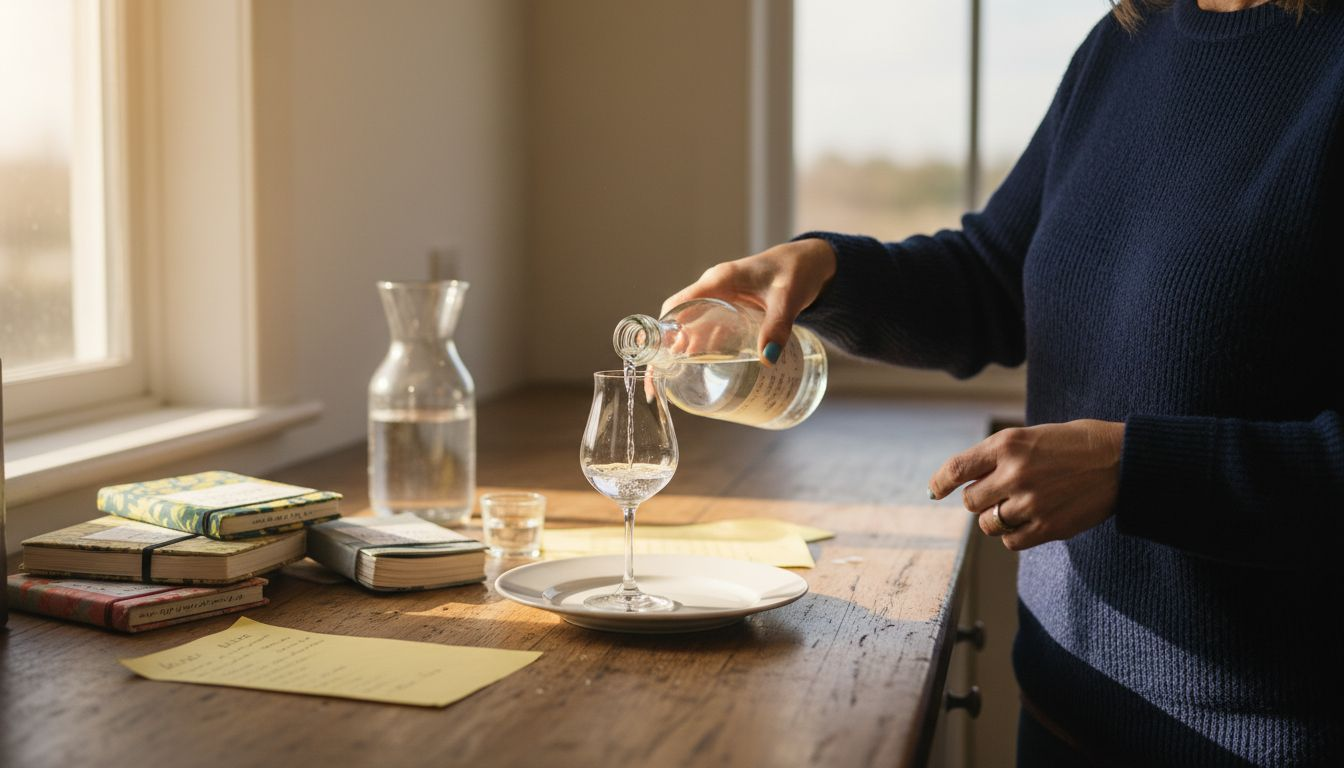
Observe how the gin presents itself visually and note the initial aromatic impressions before tasting. Swirl the glass gently to release volatile compounds and prepare your palate for a comprehensive sensory journey. Pay attention to how the botanicals interact creating a complex yet harmonious flavor progression from the first nose to the lingering finish.
Pro tip: Use a white ceramic or neutral colored surface underneath your gin to help accurately assess its true color and clarity.
Step 3: Engage Your Senses with Proper Technique
Gin tasting is a multisensory experience that requires deliberate and focused attention to unlock the spirit’s hidden complexities. Your goal is to transform a simple drink into a comprehensive sensory exploration that reveals the gin’s intricate character and nuanced botanical profile.
Begin by observing the gin’s visual characteristics. Hold the glass at a slight angle against a white background and examine its clarity, color intensity, and how light plays through the liquid. Explore gin botanicals with expert techniques to understand how each visual cue hints at the spirit’s composition. Swirl the gin gently to release its aromatic compounds, watching how it moves within the glass and observing the viscosity and legs that form along the glass walls.
Next, approach the tasting with a systematic sensory progression. Bring the glass close to your nose without inhaling deeply, allowing the subtle aromatic notes to introduce themselves gradually. Take short, gentle sniffs to capture the top notes, mid tones, and underlying botanical nuances. When you taste, let the gin coat your entire palate, paying attention to how different flavor elements emerge and interact across your taste buds.
Pro tip: Breathe through your mouth slightly while tasting to enhance your ability to detect complex flavor subtleties.
Step 4: Identify Distinctive Aromatic Notes
Understanding gin’s aromatic complexity transforms a simple tasting into a nuanced sensory journey. Your mission is to decode the intricate botanical language that defines each unique gin expression.
Explore gin’s botanical flavor profiles by developing a systematic approach to sensory analysis. Start by identifying the foundational juniper note that defines gin as a spirit. This piney essence serves as your baseline, against which other botanical notes will be compared. Look for secondary aromas like coriander seeds with their slightly citrusy warmth, angelica root offering earthy and musky undertones, and citrus peels bringing bright zesty highlights.
Compare key botanical aroma notes you may encounter in gin:
| Botanical Note | Typical Aroma Character | Tasting Impact |
|---|---|---|
| Juniper | Piney, resinous | Defines classic gin profile |
| Coriander Seed | Citrus warmth | Adds brightness and spice |
| Angelica Root | Earthy, musky | Provides subtle herbal depth |
| Citrus Peel | Bright, zesty | Enhances freshness and acidity |
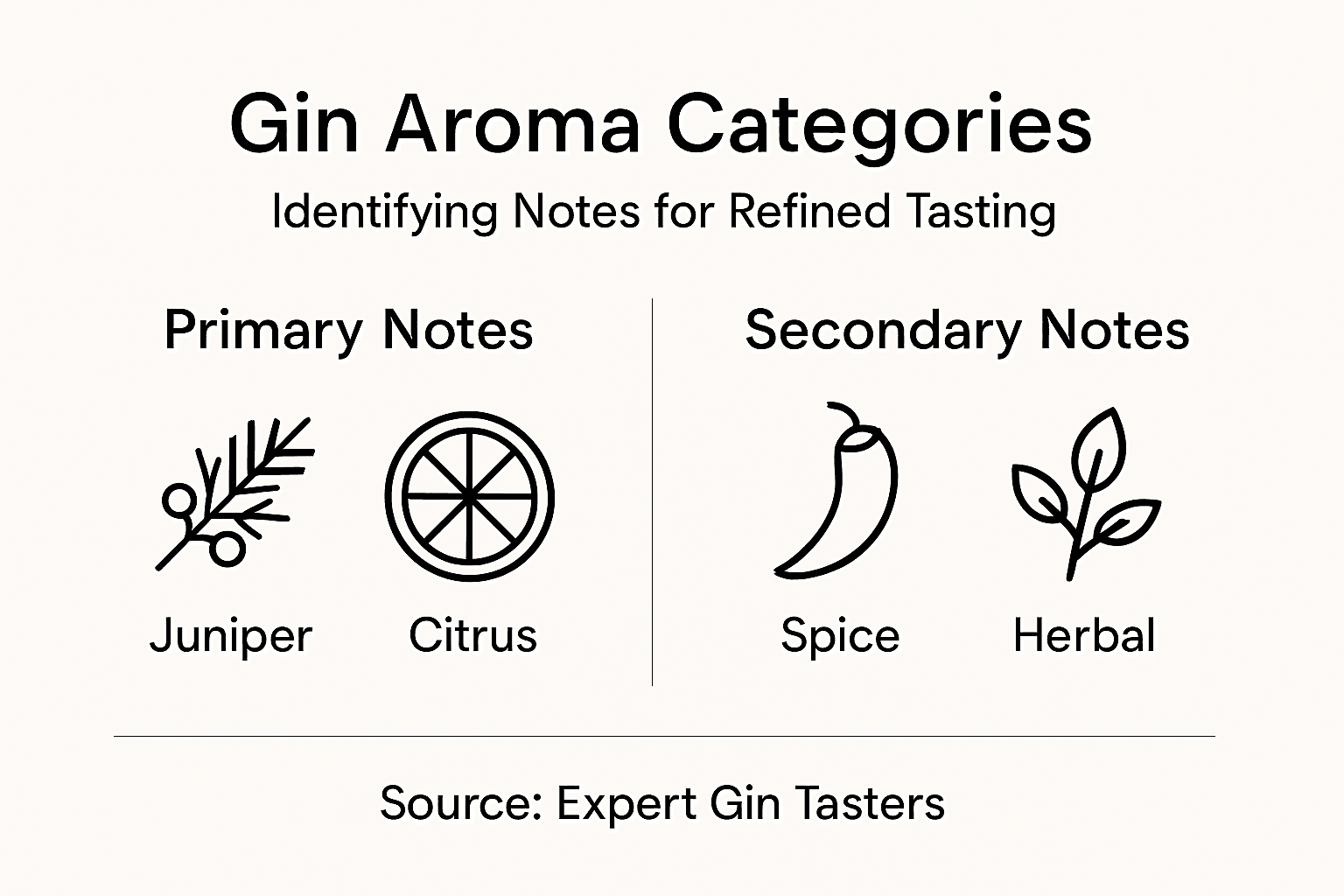
Practice distinguishing between forward and background notes. Some botanicals announce themselves boldly while others whisper subtle hints. Pay attention to how these aromas evolve from the initial nose to the mid palate and lingering finish. Train your senses to detect layered complexity by taking multiple short sniffs rather than one deep inhalation. Note how different gins showcase varying intensity and balance among their botanical ingredients.
Pro tip: Keep a tasting journal to track and compare the unique aromatic signatures of different gin styles and brands.
Step 5: Validate and Refine Your Aroma Recognition
Sensory expertise in gin tasting is a skill that demands deliberate practice and structured learning. Your journey involves transforming intuitive perceptions into precise and reliable sensory insights.
Develop professional aroma recognition skills by creating a systematic training approach. Consider investing in a gin aroma training kit that provides standardized scent references, allowing you to calibrate your sensory memory. Practice identifying individual botanical notes by comparing them side by side, focusing on subtle differences in intensity, character, and complexity. Start with basic aromatics like juniper, coriander, and citrus peels before progressing to more nuanced and complex herbal and spice notes.
Establish a consistent tasting methodology that challenges and refines your sensory perception. Conduct blind tastings where you cannot see the gin bottle, forcing yourself to rely purely on aroma and taste. Record your observations in a dedicated tasting journal, noting not just the flavors you detect but also your confidence level in identifying each botanical component. Over time, this deliberate practice will sharpen your ability to discern even the most subtle aromatic variations.
Pro tip: Periodically reset your olfactory senses by sniffing coffee grounds or taking a brief break between gin samples to maintain sensory accuracy.
Elevate Your Gin Aroma Experience with Gin Niro
Mastering the art of distinguishing gin aromas unlocks a world of sensory delight but can be challenging without the perfect spirit to practice on. This article highlights how identifying subtle botanical notes like juniper, coriander, and citrus peel deepens your tasting journey and sharpens your senses. Many gin tasters seek a truly distinctive gin that embodies complexity and balance to refine their aromatic recognition skills. Gin Niro, a premium Mediterranean-style gin, answers this need with its unique blend of zibibbo aromatic grapes and Sicilian citrus crafted through traditional distillation.
Discover the authentic taste and sophisticated aroma profile that makes Gin Niro ideal for connoisseurs aiming to enhance their sensory expertise. Visit the Homepage 6 Gin Niro to explore our artisanal gin selection crafted for refined palates. Ready to deepen your appreciation and confidence in gin tasting? Begin your journey today with Gin Niro at https://ginniro.it and transform every sip into an unforgettable discovery.
Frequently Asked Questions
How can I create the ideal environment for gin tasting?
To create the best environment for gin tasting, choose a well-lit area free from strong smells. Set up a clean table with neutral surfaces, use tulip-shaped glasses, and have palate cleansers like white crackers nearby.
What accessories do I need for a refined gin tasting experience?
Essential accessories for gin tasting include tulip-shaped glasses to enhance aromas, a notebook for recording notes, and room temperature water to cleanse your palate. Gather these items to ensure a more enjoyable tasting session.
How can I identify the different aromatic notes in gin?
To identify aromatic notes in gin, start by recognizing the foundational juniper note and then compare it to secondary aromas like coriander and citrus peels. Practice sniffing short, gentle scents to pick up individual notes and take note of how they evolve as you taste.
What technique should I use to taste gin properly?
When tasting gin, hold your glass at an angle against a white background, observe its clarity and color, and gently swirl it to release aromas. Bring the glass close to your nose and take small sniffs to identify the key aromatic components followed by tasting to fully appreciate the flavors.
How can I improve my ability to recognize gin aromas?
To enhance your aroma recognition, consider investing in a training kit that includes standard scent references. Regularly practice side-by-side comparisons of botanicals and conduct blind tastings to refine your skills.


