

Bold flavors and vibrant botanicals draw gin enthusiasts into a world where tradition meets regional creativity. Exploring the definition of a highball cocktail like the gin and tonic reveals far more than a simple mix of gin and tonic water. Mediterranean influences—from the citrus groves of Sicily to innovative Spanish distilleries—add new layers of complexity and intrigue. This guide highlights how premium, artisanal gin sourced from iconic Mediterranean regions can transform the classic cocktail through thoughtful ingredient choices and refined presentation.
Table of Contents
- Defining The Gin And Tonic Cocktail
- Classic Recipe And Essential Ingredients
- Building Your Gin And Tonic
- Types And Global Variations
- Regional Signature Styles
- Mediterranean Influence And Craft Gins
- Risks, Misconceptions, And Cocktail Alternatives
- Exploring Spirit Alternatives
- When To Consider Alternatives
Key Takeaways
| Point | Details |
|---|---|
| Cocktail Composition | A classic gin and tonic requires quality gin, good tonic water, and ice, with balance being crucial to the overall experience. |
| Garnish Influence | The choice of garnish significantly impacts flavor; lime is traditional, but alternatives like lemon or herbs can enhance regional profiles. |
| Cultural Variations | The gin and tonic manifests differently worldwide, with local preferences influencing ratios, ingredients, and garnishes. |
| Health Considerations | Awareness of quinine sensitivity is important, as tonic water contains small amounts of quinine that can cause reactions in certain individuals. |
Defining the Gin and Tonic Cocktail
A gin and tonic is fundamentally a highball cocktail made by combining gin and tonic water poured over ice. The beauty of this drink lies in its elegant simplicity. Yet beneath that straightforward structure exists considerable nuance. The ratio of gin to tonic varies considerably based on personal preference, typically ranging from 1:1 (equal parts) to 1:3 (one part gin to three parts tonic). Some drinkers prefer a heavier gin presence to showcase the spirit’s botanical complexity, while others favor more tonic for a lighter, more refreshing experience. The cocktail is traditionally garnished with a slice or wedge of lime, which adds both visual appeal and a bright citrus note that cuts through the drink’s bitterness. Ice serves a practical purpose beyond merely chilling the drink. The ice cools the gin, softening the alcohol’s initial intensity and enhancing the overall refreshment factor. This cooling effect makes the botanical flavors more approachable and balanced, transforming what could otherwise feel harsh into something genuinely pleasurable.
The story behind the gin and tonic adds considerable depth to understanding what you’re drinking. The cocktail originated in the 19th century among British military officers stationed in British India, where it evolved from medicinal origins. Colonial physicians prescribed quinine-containing tonic water to combat malaria, and soldiers would mix this bitter medicine with gin to make it palatable. Over time, this combination transcended its medicinal purpose and transformed into a refined social beverage enjoyed across continents. The drink became synonymous with British colonial culture and eventually spread globally, becoming particularly popular across English-speaking countries and Europe. Today, it represents far more than a simple remedy. It stands as an iconic classic, recognized worldwide for its refreshing and aromatic qualities.
What defines a gin and tonic today goes beyond just the ingredients. The drink’s character depends heavily on which gin you choose. A Mediterranean-influenced gin, for example, brings different flavor dimensions compared to traditional London dry styles. Premium artisanal gins crafted with specific botanicals like Sicilian citrus or aromatic grape elements create distinctly different tasting experiences. The tonic water matters equally. Higher quality tonics offer better quinine balance and carbonation, preventing the drink from becoming either excessively medicinal or flat. The ratio you select, the ice you use, and even the glassware you serve it in all contribute to the final product. What starts as a simple definition—gin plus tonic water over ice—actually encompasses considerable complexity when you dig deeper into execution and ingredient selection. Understanding these variables helps explain why how Mediterranean gin transforms cocktails opens entirely new possibilities for this classic drink.
Pro tip: Start with a 1:2 ratio of gin to tonic when exploring a new premium gin, allowing the spirit’s distinctive botanicals and character to emerge clearly before adjusting based on your preference.
Classic Recipe and Essential Ingredients
Building a proper gin and tonic starts with understanding the foundation: just three core components working in harmony. You need quality gin, good tonic water, and ice. That simplicity is deceptive. The balance between these three elements determines whether you end up with something genuinely satisfying or merely serviceable. The essential ingredients for a classic gin and tonic are gin, tonic water, and fresh lime for garnish. The traditional recipe calls for 3 ounces of gin combined with 4 ounces of tonic water, served over ice in a highball glass. This 3:4 ratio gives you a drink that’s neither gin-heavy nor tonic-dominated. It allows the gin’s botanical character to shine without being overwhelmed by the tonic’s quinine bitterness. The lime wedge does more than sit pretty on the rim. It adds a bright citrus note that bridges the gap between gin’s botanicals and tonic’s herbal bite. Some prefer lemon as an alternative, which offers a slightly different citrus profile.
Not all gins perform equally in a gin and tonic. The spirit you choose fundamentally shapes the drink’s personality. London dry gin, Plymouth, or Bombay Sapphire represent popular choices, each bringing distinct characteristics. London dry style gins tend toward juniper-forward profiles with crisp botanicals. Plymouth gin carries a slightly earthier tone with a touch of spice. Bombay Sapphire emphasizes floral and citrus notes, creating a more delicate expression. For those exploring Mediterranean influences, artisanal gins crafted with Sicilian botanicals or aromatic grapes offer completely different dimensions. These premium options showcase how the drink can evolve when you move beyond standard recipes. The tonic water deserves equal consideration. Fresh tonic from small bottles preserves the carbonation better than larger containers that sit open longer. The bubbles matter because they affect the mouthfeel and how the flavors interact. Flat tonic doesn’t cut through the gin’s weight properly. You want that crisp, active carbonation to enhance the overall refreshment.
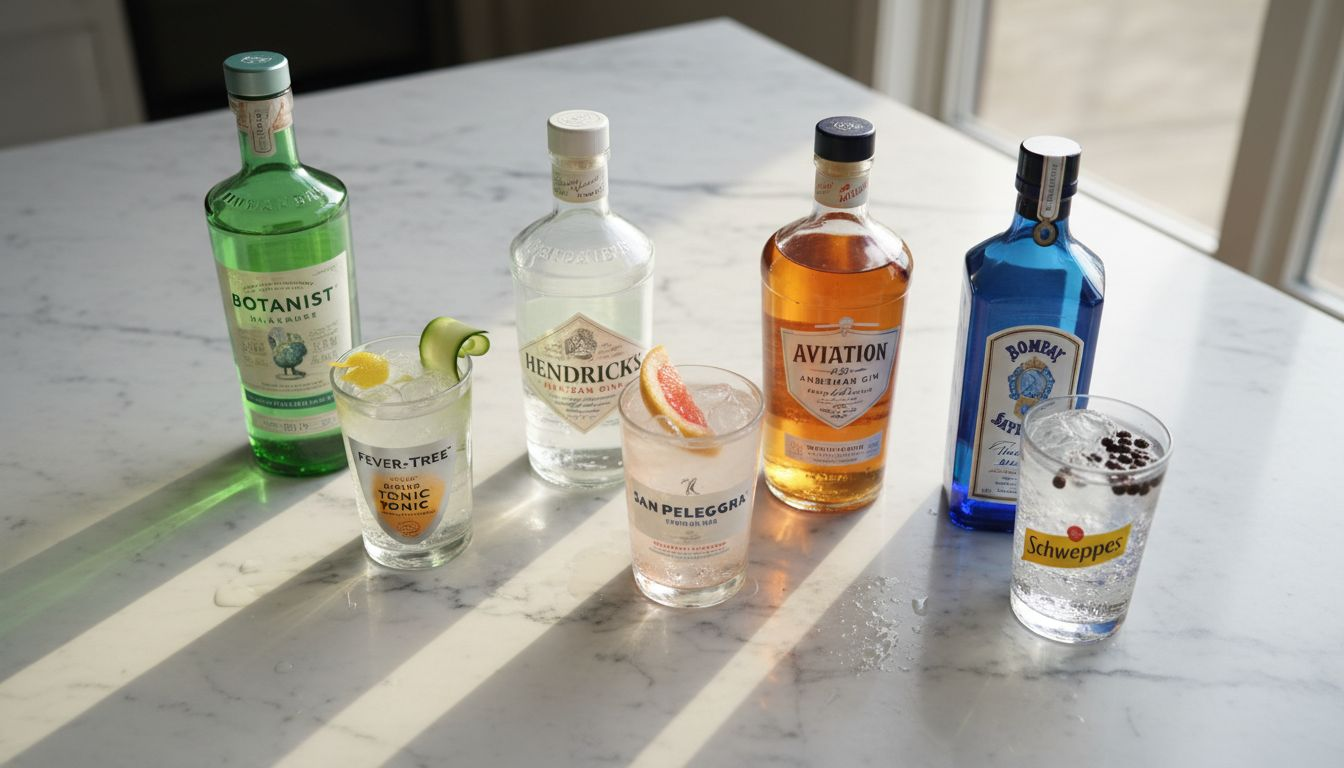
Here’s a comparison of popular gin styles and their effect on a gin and tonic:
| Gin Style | Key Flavor Notes | Tonic Pairing Impact |
|---|---|---|
| London Dry | Juniper, crisp botanicals | Classic balance, crisp finish |
| Plymouth | Earthy, mild spice | Warmer, richer mouthfeel |
| Bombay Sapphire | Floral, citrus-forward | Delicate, enhances aromatics |
| Mediterranean | Regional botanicals, citrus | Bold, layered, distinctive |
Building Your Gin and Tonic
Here’s a straightforward approach to making this cocktail:
- Fill a highball glass with quality ice cubes (avoid those thin, fast-melting chips)
- Pour 3 ounces of your chosen gin into the glass
- Top with 4 ounces of cold, fresh tonic water
- Stir gently to combine without over-aerating
- Squeeze a lime wedge over the drink and drop it in as garnish
The order of assembly matters slightly. Adding gin first means the tonic integrates smoothly rather than creating layers. Gentle stirring prevents unnecessary agitation that would release too much carbonation. Some variations might include a splash of fresh lime juice or a dash of aromatic bitters, but the core remains gin, tonic, and lime. The beauty of this drink lies in how minor adjustments create different experiences. A premium gin with distinctive botanicals will taste noticeably different from a standard option. Switching from a standard tonic to one with better quinine balance creates a more refined, less medicinal finish. Even the ice type influences the result. Larger ice cubes melt slower, keeping the drink cold longer without over-dilution.
Pro tip: Always use cold, fresh tonic water from a recently opened bottle, and add it last while the ice is still at its coldest, ensuring maximum carbonation and the brightest flavor profile in your finished drink.
Types and Global Variations
The gin and tonic you drink in London bears little resemblance to what bartenders craft in Madrid or Tokyo. This classic cocktail has fractured into dozens of distinct interpretations across the globe, each shaped by local ingredients, cultural preferences, and regional drinking traditions. The gin and tonic varies globally in gin-to-tonic ratios, garnishes, and glassware, with different naming conventions reflecting these regional shifts. In parts of Europe, you’ll hear it called gin tonic or ginto, while Nordic bartenders simply say GT. These linguistic differences hint at something deeper: the drink has been thoroughly adopted and transformed by different cultures rather than simply exported intact. The fundamental structure remains recognizable, yet each region has claimed ownership and adapted the formula to suit local tastes. Some prefer their drinks gin-dominant at 1:1 ratios, pushing botanical complexity to the forefront. Others favor a more diluted 3:1 tonic-to-gin approach, emphasizing refreshment over spirit character. This flexibility explains why the cocktail traveled so successfully across continents and continues to thrive in wildly different markets.
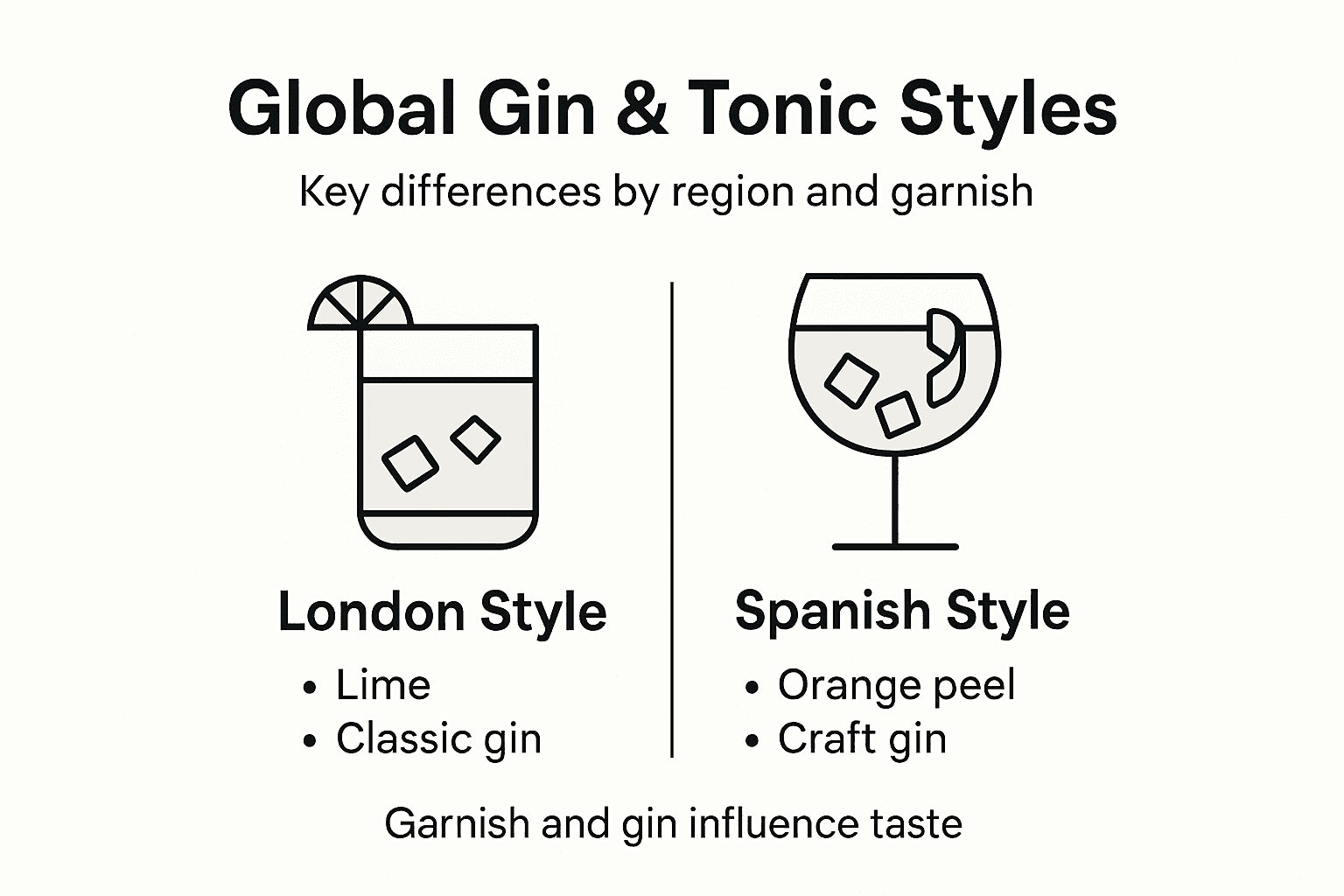
Garnish choices reveal how deeply regional preferences influence gin and tonic culture. The classic lime wedge represents just a starting point. Mediterranean bartenders lean toward lemon or orange peel, bringing warmer citrus notes that complement different gin profiles. Spanish versions often feature elaborate herb garnishes like rosemary or thyme, adding aromatic complexity. Nordic regions sometimes incorporate juniper berries or other botanicals that echo the gin itself. Beyond simple citrus, creative interpretations have spawned entirely new categories. Popular gin and tonic variations incorporate different garnishes and botanical infusions to create unique flavor profiles. Consider the Grapefruit Rosemary G&T, which swaps traditional lime for bright citrus while adding herbal depth. The Blackberry G&T uses fresh berries and complementary herbs to create an entirely different drinking experience. Chambord variations introduce French liqueur notes that transform the flavor dynamic completely. The Gin Rickey takes a different directional path, substituting club soda for tonic to create something lighter and less bitter. These aren’t mere gimmicks or Instagram bait. They represent legitimate explorations of how different ingredients interact with gin’s botanical complexity.
Regional Signature Styles
Different parts of the world have developed distinct approaches that merit understanding:
- Spain and Portugal: Often feature extensive herb garnishes, lower gin ratios, and larger serving glasses that emphasize visual presentation and refreshment
- United Kingdom: Maintains the classic formula with quality gin taking center stage, typically using premium tonics and simple lime garnish
- Nordic regions: Embrace minimalism with precise ratios and clean presentation, sometimes incorporating local botanicals like cloudberries or seaweed
- Mediterranean zones: Lean toward citrus-forward presentations with higher quality gins showcasing regional botanicals, often including fresh fruit components
What unites all these variations is the core principle: balance. Whether you’re drinking in Stockholm or Sicily, the goal remains achieving harmony between gin’s botanicals, tonic’s bitterness, and whatever garnish or modification the bartender introduces. Mediterranean artisanal gins with Sicilian botanicals represent an interesting contemporary variation that emphasizes terroir and regional identity. When you select a gin infused with local citrus and aromatic elements, you’re essentially creating a geographically specific expression of the cocktail. The drink becomes a statement about place as much as about balance and flavor.
Below is a quick reference to common global gin and tonic garnish trends:
| Region | Typical Garnish | Flavor Emphasis |
|---|---|---|
| UK | Lime wedge | Classic, crisp citrus |
| Spain/Portugal | Fresh herbs, orange | Herbal, aromatic, vibrant |
| Mediterranean | Lemon, local fruits | Bright, citrus-forward |
| Nordic | Juniper berries | Botanical, earthy |
Pro tip: Experiment with your garnish based on the specific gin you’re using—citrus-forward gins pair beautifully with lemon or orange, while herbal gins shine with fresh rosemary or thyme, allowing each gin’s character to guide your choice rather than defaulting to lime for every variation.
Mediterranean Influence and Craft Gins
The Mediterranean region has fundamentally transformed how gin and tonic culture operates globally. What started as a British colonial drink has been completely reimagined through the lens of Southern European ingredients, traditions, and sensibilities. The shift happened gradually but decisively over the past two decades as craft distillers began asking a simple question: what if we made gin using what grows here instead of relying on classic juniper formulas? The answer produced something remarkable. Mediterranean craft gins represent a distinct category that challenges everything people thought they knew about the spirit. Rather than the juniper-heavy profile of London dry gins, these expressions prioritize local botanicals. Spanish gins incorporate regional botanicals such as citrus from Valencia, wild herbs, rosemary, thyme, and coastal plants. Sicilian producers take similar approaches but with their own terroir, emphasizing aromatic grapes like zibibbo combined with distinctive citrus varieties found nowhere else. The Mediterranean climate itself contributes meaningfully. Long, warm growing seasons develop more complex flavor compounds in botanicals. Coastal plants absorb sea minerals that create mineral, almost briny notes. Wild herbs develop more concentrated essential oils. All of these factors combine to create gin expressions that taste unmistakably of their origin, rather than resembling gins from other regions.
Craft gin distillers across the Mediterranean have also revolutionized how the gin and tonic is served and appreciated. The presentation has become as important as the liquid itself. Why gin transforms Mediterranean cocktails extends beyond just flavor profiles into the entire drinking experience and cultural context. Spanish-style gin and tonic culture exemplifies this shift perfectly. Instead of standard highball glasses, bartenders serve the drink in oversized balloon glasses that allow space for elaborate garnishes and encourage longer sipping. Premium tonics replace standard options, creating better quinine balance that complements these distinctive gins rather than overwhelming them. The garnish transforms from a simple lime wedge into an art form. Fresh herbs like basil, rosemary, or thyme get incorporated alongside citrus slices. Some bars add edible flowers, cucumber ribbons, or even smoked botanicals that create aromatic complexity with each sip. This isn’t showmanship for its own sake. These choices reflect serious thinking about flavor balance and how different components interact with specific gin expressions. A gin featuring prominent herbal notes pairs differently than one emphasizing citrus brightness. The garnish selection amplifies these characteristics rather than masking them.
What Makes Mediterranean Craft Gins Distinctive
Several factors set Mediterranean craft gins apart from their traditional counterparts:
- Botanical sourcing: Local ingredients sourced within the region create terroir-driven flavor profiles that reflect specific places
- Climate influence: Warm Mediterranean conditions develop more complex essential oils and flavor compounds in plants
- Distillation philosophy: Craft producers often use lower-temperature distillation methods that preserve delicate botanical characteristics rather than stripping them away
- Flavor progression: Mediterranean gins typically reveal layered flavors that evolve as the drink warms and carbonation diminishes
- Cultural presentation: The drinking ritual emphasizes quality glassware, premium tonics, and thoughtful garnish selection as integral to the experience
When you combine a Mediterranean craft gin with a quality tonic water, lime, and fresh herbs in a proper balloon glass, you’re not just making a cocktail. You’re participating in a regional drinking culture that values craftsmanship, ingredient quality, and intentional flavor composition. The gin and tonic served this way becomes something transcendent. What begins as simple ingredients transforms through careful selection and presentation into an expression of place and craft. Artisanal distillers who incorporate Sicilian citrus or aromatic grape elements have fundamentally expanded the possibilities of what gin can express. They’ve proven that the spirit can celebrate its geographic origin rather than conforming to international standards. For enthusiasts interested in exploring how premium ingredients shape flavor, Mediterranean craft gins offer the perfect entry point.
Pro tip: When selecting a Mediterranean craft gin for your next cocktail, choose a premium tonic that won’t overpower the delicate botanicals, and use fresh herbs that complement the specific gin’s flavor profile rather than defaulting to standard lime garnish.
Risks, Misconceptions, and Cocktail Alternatives
While the gin and tonic enjoys a reputation as a refined, straightforward cocktail, some important health considerations deserve attention. The drink’s key ingredient—tonic water—contains quinine, a compound derived from Cinchona bark that historically served medicinal purposes. Modern tonic water uses quinine in small quantities, but quinine can cause dermatological reactions including allergic urticaria and photosensitivity. For most people, these reactions remain rare and mild. However, certain individuals experience more severe responses. Some reported cases involve fixed drug eruptions or heightened sensitivity to sun exposure after consuming quinine. In extremely rare instances, severe conditions like Stevens-Johnson syndrome have been documented, though this represents a tiny fraction of gin and tonic consumption globally. If you’ve experienced unusual skin reactions after drinking gin and tonics, or if you have a known sensitivity to quinine, it’s worth discussing with a healthcare provider. This doesn’t mean avoiding the drink entirely, but rather understanding your personal tolerance and potentially exploring alternatives. Most people consume gin and tonics without any adverse effects, but awareness of these possibilities helps you make informed choices about your drinking.
Another common misconception involves the medicinal efficacy of tonic water itself. Many people believe that drinking gin and tonics provides health benefits beyond simple enjoyment. This belief stems from tonic water’s historical use as a malaria preventative in tropical regions. Modern tonic water contains quinine in concentrations far too low to provide any antimalarial protection. The drink serves no medicinal purpose whatsoever. It’s simply a pleasant beverage to enjoy for its taste and the social experience it provides. Separating fact from historical lore matters when discussing any ingredient with a medical past. The gin and tonic’s popularity owes nothing to health properties and everything to flavor balance and cultural tradition. Understanding this distinction helps you appreciate the drink for what it actually is rather than attributing imaginary benefits to it.
Exploring Spirit Alternatives
If you want to explore variations beyond the classic formula, several spirits work as substitutes, though each creates a distinctly different drinking experience. Gin can be substituted with spirits like vodka, aquavit, or tequila, each altering the flavor profile significantly. Vodka offers the most neutral option, creating a drink where tonic’s bitterness and citrus garnish dominate the flavor. This approach works well if you prefer tonic-forward expressions but differs markedly from a proper gin and tonic. Aquavit provides a closer approximation to gin’s botanical character since it also emphasizes herbal and spice notes, though with a distinctly Scandinavian character. Some bartenders use aquavit to create Nordic variations that honor both traditions. Tequila transforms the drink into something entirely different—less herbal, more agave-driven, with a peppery undertone that creates an interesting but unconventional pairing with tonic. None of these substitutions recreate what makes a gin and tonic special. They create different cocktails that happen to use the same mixer. This distinction matters because expectations shape experience. If you approach a vodka and tonic expecting a gin and tonic, you’ll likely feel disappointed. If you approach it as its own drink with its own merits, you might discover something interesting. Beyond spirit substitution, you could explore famous gin-based cocktails that maintain gin’s prominence while exploring completely different flavor directions. The Martini, Negroni, Daiquiri variations, and countless other cocktails showcase gin’s versatility far more dramatically than spirit substitutions ever could.
When to Consider Alternatives
Several situations might prompt you to explore alternatives:
- Quinine sensitivity: If you’ve experienced any adverse reactions, consider drinks using different mixers entirely
- Flavor exploration: You might simply want to experience how other spirits pair with tonic or different mixers
- Availability constraints: In some regions, quality gin proves difficult to source, making substitutions practical
- Dietary preferences: Some people prefer avoiding alcohol entirely or exploring lower-alcohol options
For those with genuine quinine sensitivity or who simply prefer avoiding it, numerous gin cocktails exist that skip tonic entirely. The beauty of gin lies in its botanical complexity, which shines brilliantly in countless applications beyond the classic gin and tonic. Rather than viewing alternatives as compromises, consider them as doorways into different drinking experiences. A well-made Negroni explores bitter and botanical dimensions differently than a gin and tonic ever could. A Martini showcases gin’s pure spirit character without any mixers masking its complexity. These aren’t inferior options. They’re different expressions that appeal to different moods and occasions.
Pro tip: If you’re sensitive to quinine or simply want to reduce tonic consumption, explore premium gin cocktails that highlight botanical complexity without relying on tonic water as a base mixer.
Elevate Your Gin and Tonic Experience with Mediterranean Craftsmanship
Many gin enthusiasts seek a perfect balance between botanical complexity and refreshing flavor in their gin and tonic. This article highlights how selecting the right gin and tonic ratio, quality tonic water, and thoughtful garnishes can unlock new dimensions of taste. If you have ever found yourself wishing for a gin that naturally pairs with fresh herbs and Mediterranean citrus or one that transforms your cocktail into a reflection of terroir, your search ends here.
Discover the unique qualities of Gin Niro, an artisanal Mediterranean gin crafted with Sicilian citrus and aromatic zibibbo grapes. Its traditional distillation methods deliver a layered sensory experience that fits perfectly with the classic gin and tonic formula yet redefines it. Whether you want to experiment with regional garnishes or simply enjoy a premium gin that elevates every sip, Gin Niro offers that sophisticated craftsmanship.
Explore detailed product information and the brand story to understand how Mediterranean influences make this gin stand apart.
Ready to transform your gin and tonic into an extraordinary experience that celebrates balance and place? Visit Gin Niro now to purchase your bottle and start creating cocktails that spark delight and distinguish your palate. Don’t miss out on exploring how Mediterranean tradition and premium quality can elevate your favorite classic cocktail today.
Frequently Asked Questions
What are the essential ingredients for a gin and tonic?
The essential ingredients for a classic gin and tonic are quality gin, good tonic water, fresh lime for garnish, and ice. A typical recipe uses 3 ounces of gin to 4 ounces of tonic water.
How can I enhance the flavor of my gin and tonic?
You can enhance the flavor of your gin and tonic by experimenting with different gin styles, using high-quality tonic water, and adding fresh garnishes like herbs or citrus fruits that complement the gin’s botanicals.
What is the best gin-to-tonic ratio for a balanced drink?
A common ratio for a balanced gin and tonic is 1:2, meaning one part gin to two parts tonic water. This allows the gin’s botanical flavors to shine without being overwhelmed by the tonic’s bitterness.
How do different gin styles affect the taste of a gin and tonic?
Different gin styles can significantly affect the taste of a gin and tonic. For example, London dry gins are juniper-forward, while Mediterranean gins often feature a range of local botanicals, creating unique flavor profiles and drinking experiences.


