

The pursuit of a truly remarkable gin starts with more than just selecting a well-designed bottle or chasing high alcohol content. For globally-minded connoisseurs and lovers of Mediterranean spirits, understanding what defines a premium gin matters as much as savoring its complex botanicals. Distinctive gin blends demand exceptional craftsmanship, clarity about juniper dominance, and transparent production standards that guarantee authenticity in every glass. Discover what elevates gin from ordinary to extraordinary and learn how expertise in ingredient selection, distillation, and sensory balance sets premium spirits apart.
Table of Contents
- Defining Premium Gin And Common Misconceptions
- Key Ingredients And Distillation Techniques
- Unique Flavor Profiles And Sensory Experience
- How Premium Gin Differs From Standard Varieties
- Choosing, Enjoying, And Pairing Premium Gin
Key Takeaways
| Point | Details |
|---|---|
| Premium Gin Characteristics | Premium gin is defined by superior botanical selection, artisanal production methods, and adherence to strict regulatory standards. |
| Distillation Techniques | Distillation methods significantly impact flavor profiles, with small-batch techniques resulting in richer and more complex gins. |
| Sensory Experience | Tasting premium gin involves a complex sensory journey, engaging taste, aroma, and aftertaste, requiring careful evaluation. |
| Choosing Quality Gin | Selecting premium gin should focus on origin, botanical complexity, and production transparency for an authentic experience. |
Defining Premium Gin and Common Misconceptions
Premium gin represents a sophisticated category of spirits distinguished by exceptional craftsmanship, meticulous ingredient selection, and a commitment to quality that transcends traditional distillation methods. Regulatory definitions of gin emphasize specific production standards that elevate a gin from standard to premium.
At its core, premium gin distinguishes itself through several key characteristics:
- Superior botanical selection with complex flavor profiles
- Small-batch or artisanal production techniques
- High-quality base spirits from carefully selected grains
- Precise distillation methods that preserve botanical nuances
- Attention to terroir and regional ingredient provenance
Contrary to popular misconceptions, premium gin is not simply about higher alcohol content or elaborate packaging. It represents a holistic approach to spirit production that prioritizes flavor complexity, historical craft techniques, and ingredient integrity. Juniper dominance remains the fundamental legal requirement, with the spirit needing to derive its primary flavor from juniper berries while allowing for innovative botanical combinations.
Legal standards further define premium gin’s parameters. According to US federal regulations, gin must contain at least 40% alcohol by volume and be flavored primarily with juniper berries. This framework prevents misleading marketing while ensuring consumers receive an authentic gin experience.
Pro tip: When selecting a premium gin, examine the producer’s transparency about botanical sources, distillation methods, and regional ingredients to truly understand its quality.
Key Ingredients and Distillation Techniques
The art of premium gin production centers around sophisticated botanical selection and distillation processes. Each step represents a careful orchestration of scientific precision and culinary creativity, transforming base neutral spirits into complex, nuanced beverages.
Key botanical ingredients define a gin’s character and typically include:
- Juniper berries: The mandatory primary flavor profile
- Citrus peels: Adding brightness and complexity
- Herbs and spices: Coriander, angelica root, cardamom
- Regional botanicals: Unique ingredients reflecting local terroir
- Exotic additions: Rare flowers, roots, or indigenous plants
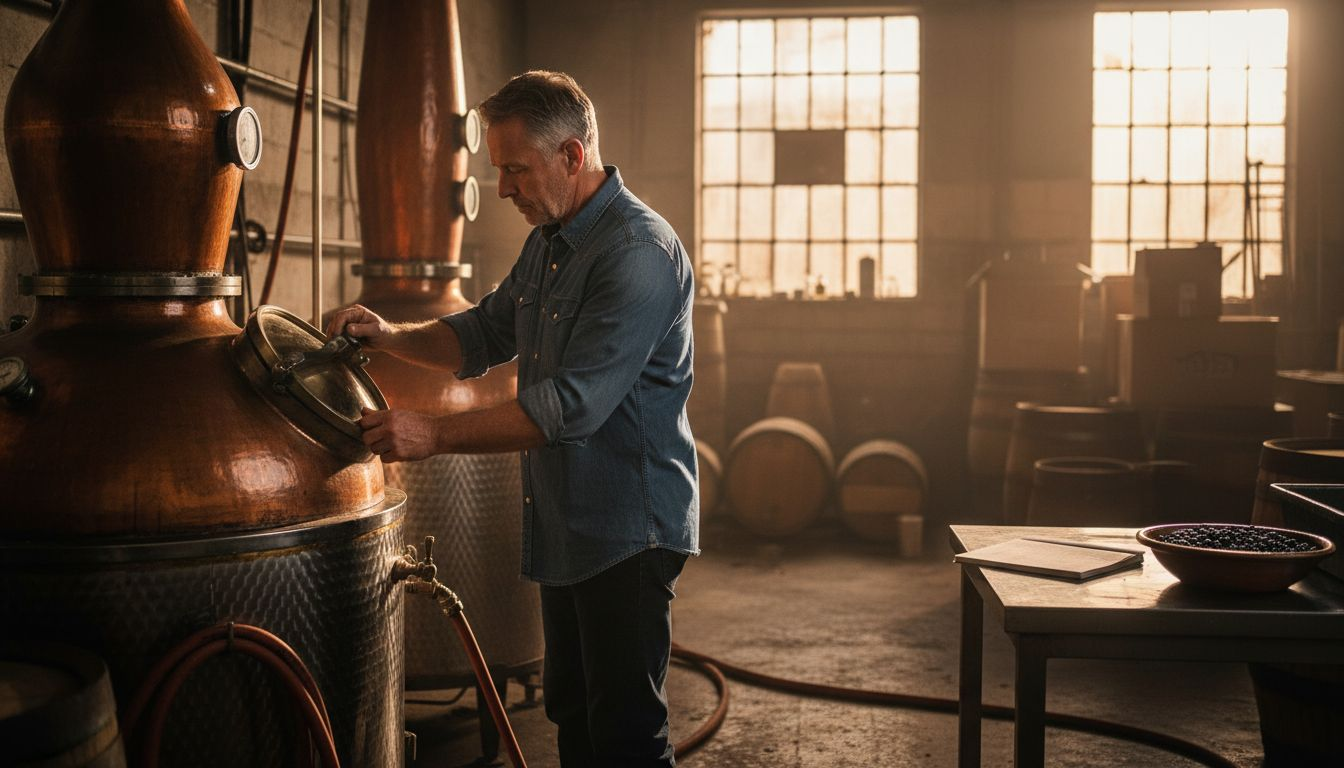
Distillation techniques dramatically influence gin’s final flavor. Producers can choose between several methods, each imparting distinct characteristics. Pot still distillation allows for deeper botanical integration, while column still distillation creates cleaner, more refined spirits. Some artisan distillers even employ hybrid approaches, layering multiple techniques to achieve extraordinary depth.
The fermentation process begins with carefully selected grains, which are transformed through precise temperature control and expert manipulation. Premium gin producers often invest significant resources in understanding how minute variations in distillation can dramatically alter flavor profiles, treating each batch as a unique artistic expression.
Pro tip: When exploring premium gins, pay attention to the specific botanicals and distillation methods listed on the bottle to understand its unique flavor journey.
Unique Flavor Profiles and Sensory Experience
Premium gin represents a complex sensory journey that engages multiple perceptual dimensions. Multisensory flavor perception reveals that 80-90% of flavor sensation emerges from intricate interactions between taste, aroma, and cognitive expectations, transforming gin tasting into a sophisticated experience.
Key sensory characteristics of premium gin include:
- Aroma complexity: Layered botanical notes
- Mouthfeel: Smooth, refined texture
- Taste progression: Initial, mid-palate, and finish notes
- Aromatics: Distinct herbal, floral, or spice elements
- Aftertaste: Clean, memorable lingering sensation
The art of gin tasting extends beyond simple consumption, requiring a nuanced approach to sensory evaluation. Trained sensory panels meticulously analyze each gin, assessing subtle variations in flavor profile, ensuring that premium gins deliver a consistently exceptional experience. Some distillers employ advanced techniques like gas chromatography to map exact flavor molecular compositions, elevating gin appreciation to a scientific discipline.
Regional botanical variations create unique flavor landscapes, with Mediterranean gins often featuring citrus and herbal notes, while Nordic varieties might emphasize pine and cooling botanicals. This geographic specificity transforms gin from a mere alcoholic beverage into a liquid representation of cultural terroir.
Pro tip: Enhance your gin tasting by allowing the spirit to rest briefly in the glass, releasing complex aromatics and preparing your palate for a full sensory exploration.
How Premium Gin Differs From Standard Varieties
Premium gin distinguishes itself through rigorous production standards and botanical integration that elevate the spirit beyond conventional expectations. Unlike standard varieties, premium gins represent a meticulous craft that prioritizes exceptional quality, complexity, and sensory experience.
Key differentiating characteristics of premium gin include:
- Botanical selection: Carefully curated, high-quality ingredients
- Distillation method: Precise, often small-batch techniques
- Flavor complexity: Sophisticated, layered botanical profiles
- Regulatory compliance: Strict adherence to production standards
- Alcohol purity: Minimal additives and maximum flavor authenticity
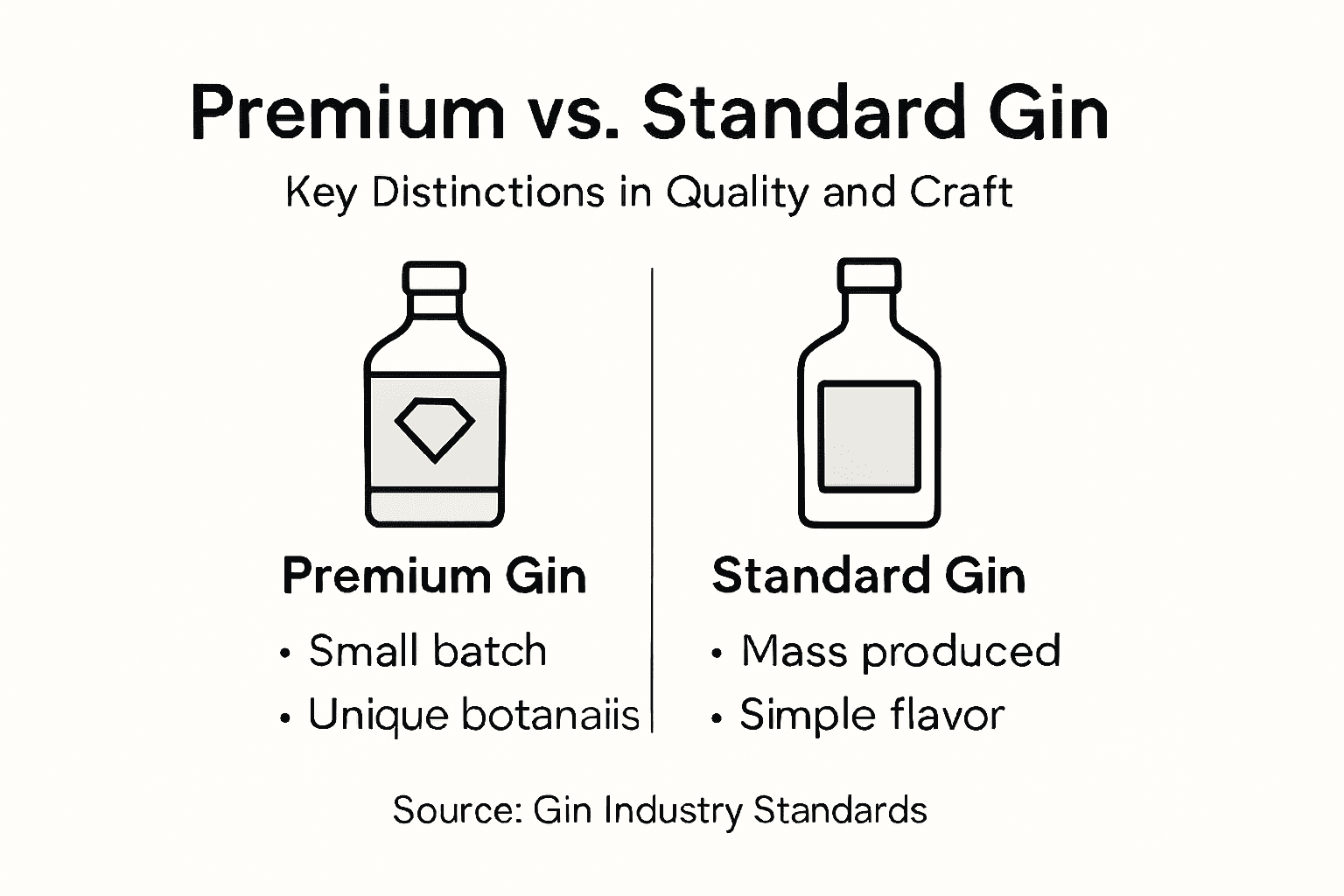
Standard gins often rely on mass-production techniques and generic flavor profiles, whereas premium gin represents an artisanal approach. The production process involves intricate botanical integration during distillation, ensuring that each ingredient contributes to a nuanced and sophisticated flavor landscape. Distillers of premium gin invest significantly more time and resources in selecting rare botanicals, experimenting with unique combinations, and perfecting their craft.
While standard gins might add flavors post-distillation, premium varieties like London Dry gin maintain strict regulations. These regulations mandate that all flavoring must occur during the distillation process, with no additional sweeteners or artificial colorings permitted. This commitment to purity ensures that each sip represents the truest expression of the gin’s botanical character.
Here’s a comparison highlighting how premium gin differs from standard gin across several critical aspects:
| Aspect | Premium Gin | Standard Gin |
|---|---|---|
| Production Scale | Small-batch, artisanal | Large-scale, industrial |
| Ingredient Sourcing | Rare, region-specific botanicals | Common and widely available botanicals |
| Flavor Development | Layered, nuanced profiles | Simple, straightforward profiles |
| Regulatory Compliance | Strict adherence to international laws | Basic compliance, minimal restrictions |
| Additives | No artificial colors or sweeteners | May contain added flavors or sweeteners |
Pro tip: When comparing gins, examine the bottle’s production details and look for indicators of small-batch production, specific botanical sourcing, and distillation methods.
Choosing, Enjoying, and Pairing Premium Gin
Selecting an exceptional premium gin requires a nuanced understanding of production standards and flavor dynamics. Connoisseurs approach gin selection with the same meticulous attention a sommelier might apply to wine, considering botanical complexity, distillation technique, and regional character.
Key considerations when choosing premium gin include:
- Origin: Geographical provenance and local botanical traditions
- Distillation method: Small-batch versus industrial production
- Botanical profile: Complexity and uniqueness of ingredient combinations
- Alcohol content: Typically 40-45% for balanced flavor expression
- Production transparency: Detailed information about crafting process
Enjoyment of premium gin transcends simple consumption, transforming into a multisensory experience. Serving temperature and glassware play critical roles in revealing the spirit’s nuanced flavors. Subtle differences in presentation can dramatically alter the gin’s aromatic profile, with expert enthusiasts often preferring minimally adorned servings that allow the botanical complexity to shine.
Pairing premium gin requires thoughtful consideration of complementary and contrasting flavor elements. Classic combinations include light tonics that enhance botanical notes, while more adventurous pairings might incorporate herbal garnishes, citrus zests, or artisanal mixers that interact harmoniously with the gin’s unique flavor landscape. Regional ingredients often provide the most authentic and sophisticated pairing experiences.
For a quick reference, key serving and pairing considerations for premium gin are summarized below:
| Consideration | Why It Matters | Example Impact |
|---|---|---|
| Glassware Choice | Enhances aroma release | Balloon glass for complex notes |
| Serving Temperature | Affects mouthfeel and flavor clarity | Chilled for smoother texture |
| Pairing Ingredients | Highlights botanical complexity | Herbaceous garnishes add depth |
| Mixer Selection | Balances or boosts flavors | Artisan tonic enhances citrus |
Pro tip: Experiment with different serving temperatures and glassware to discover how subtle changes can dramatically transform your premium gin’s sensory experience.
Discover the Art of Premium Gin with Gin Niro
Understanding what sets premium gin apart can be challenging. This article highlights the importance of careful botanical selection, artisanal distillation methods, and authentic flavor complexity. If you seek a gin that embodies these values, crafted with Mediterranean passion and rooted in tradition, Gin Niro offers a unique solution. Its blend of zibibbo grapes and Sicilian citrus, paired with expert small-batch distillation, perfectly illustrates the craftsmanship premium gin demands.
Explore our Homepage – Gin Niro to experience the exceptional quality that defines premium gin. Elevate your next tasting with a spirit that respects every step of the process from ingredient sourcing to sensory experience. Visit ginniro.it now to bring home a bottle that transforms ordinary moments into extraordinary celebrations.
Frequently Asked Questions
What defines premium gin?
Premium gin is characterized by exceptional craftsmanship, high-quality botanicals, small-batch or artisanal production techniques, and a commitment to flavor complexity and ingredient integrity.
How does premium gin differ from standard varieties?
Premium gin uses carefully selected botanicals, often produced in small batches, resulting in layered, nuanced flavors, while standard gins rely on mass production and simpler flavor profiles.
What key ingredients are typically found in premium gin?
Premium gin often includes juniper berries, citrus peels, various herbs, and potentially unique regional botanicals, all intricately combined to create a complex flavor profile.
What should I consider when selecting a premium gin?
When choosing a premium gin, consider the origin, distillation method, botanical profile, alcohol content, and production transparency to understand its quality and flavor dynamics.


