

Many gin enthusiasts believe that stronger juniper automatically means better quality. This widespread misconception overlooks the true hallmarks of premium gin: botanical harmony, base spirit purity, and artisanal distillation craftsmanship. Understanding these elements transforms how you appreciate Mediterranean gins, where sun-kissed botanicals create complexity beyond simple juniper dominance. This guide reveals what genuinely defines quality and empowers you to recognize exceptional gins that deliver rich, balanced flavor experiences.
Table of Contents
- Understanding Quality Attributes In Premium Gin
- Influence Of Mediterranean Botanicals On Gin Quality
- The Role Of Distillation In Elevating Gin Quality
- Common Misconceptions About Gin Quality
- Comparing Artisanal Mediterranean Gins With Mass-Market Options
- How Gin Quality Enhances Tasting And Cocktail Experiences
- Challenges And Realities Of Maintaining Quality In Artisan Gin Production
- Summary: Appreciating And Choosing High-Quality Mediterranean Gin
- Discover Quality Mediterranean Gin At Gin Niro
- Frequently Asked Questions
Key takeaways
| Point | Details |
|---|---|
| Quality depends on balance | Premium gin quality stems from botanical harmony, base spirit purity, and distillation craftsmanship rather than single-ingredient dominance. |
| Mediterranean botanicals add complexity | Zibibbo grapes, Sicilian citrus, and herbs like thyme create unique aromatic profiles that elevate sensory experiences. |
| Artisanal methods preserve flavor | Small-batch copper still distillation maintains delicate botanical integrity better than industrial continuous distillation. |
| Price doesn’t guarantee quality | Authentic artisanal provenance, natural ingredients, and transparent batch information matter more than cost alone. |
| Quality enhances enjoyment | Balanced botanicals and smooth base spirits improve both sipping pleasure and cocktail versatility. |
Understanding quality attributes in premium gin
Quality in premium gin extends far beyond a single botanical. It emerges from the interplay of carefully selected ingredients, pure base spirits, and meticulous production methods that together create flavor complexity.
High-quality gins maintain a balanced juniper presence, avoiding the misconception that stronger juniper flavor always equals better gin. Instead, the interplay of complementary botanicals shapes overall quality.
Mediterranean botanicals offer distinctive character. Zibibbo grapes contribute aromatic sweetness, while Sicilian citrus adds bright, sun-ripened freshness. These unique Mediterranean gin botanicals create layers of flavor that transform ordinary spirits into memorable experiences.
The base spirit’s purity directly impacts final quality. Artisanal producers often select grape or grain spirits with clean profiles that allow botanicals to shine. Mass-market options frequently use cheaper neutral spirits that lack character.
Production methods matter immensely:
- Small-batch distillation preserves delicate botanical oils
- Copper pot stills remove harsh compounds while retaining flavor
- Vapor infusion captures aromatic complexity better than simple maceration
- Low-temperature distillation protects volatile citrus and floral notes
Pro Tip: Ignore price tags as primary quality indicators. Instead, examine botanical lists, distillation details, and producer transparency to judge true artisanal value.
Influence of Mediterranean botanicals on gin quality
Mediterranean botanicals transform gin from a simple juniper spirit into a complex sensory journey. These sun-drenched ingredients bring culinary sophistication and regional authenticity that mass-market gins cannot replicate.
Successful Mediterranean artisanal gins like Gin Mare use herbs such as thyme, basil, and rosemary to create a distinctive culinary style that enhances food pairing possibilities and adds gastronomic value.
Key Mediterranean botanicals that define quality:
- Zibibbo grapes offer aromatic sweetness and wine-like depth
- Mediterranean citrus in gin delivers bright, authentic freshness
- Thyme adds earthy herbaceous notes
- Basil contributes peppery complexity
- Rosemary provides piney, resinous character
- Arbequina olives create savory umami undertones
How Mediterranean botanicals build complexity:
- Initial distillation extracts essential oils from citrus peels
- Vapor infusion captures delicate herb aromatics without bitterness
- Maceration integrates grape-based sweetness into the spirit base
- Final blending balances all botanical layers for harmony
- Resting allows flavors to marry and mellow before bottling
These ingredients create gastronomic gins that pair beautifully with Mediterranean cuisine. The herbal notes complement olive oil-based dishes, while citrus brightness cuts through rich seafood. This culinary connection elevates gin from cocktail ingredient to versatile dining companion.
The role of distillation in elevating gin quality
Distillation craftsmanship separates exceptional gin from mediocre spirits. Traditional methods using copper stills and small batches preserve botanical integrity that industrial processes destroy.
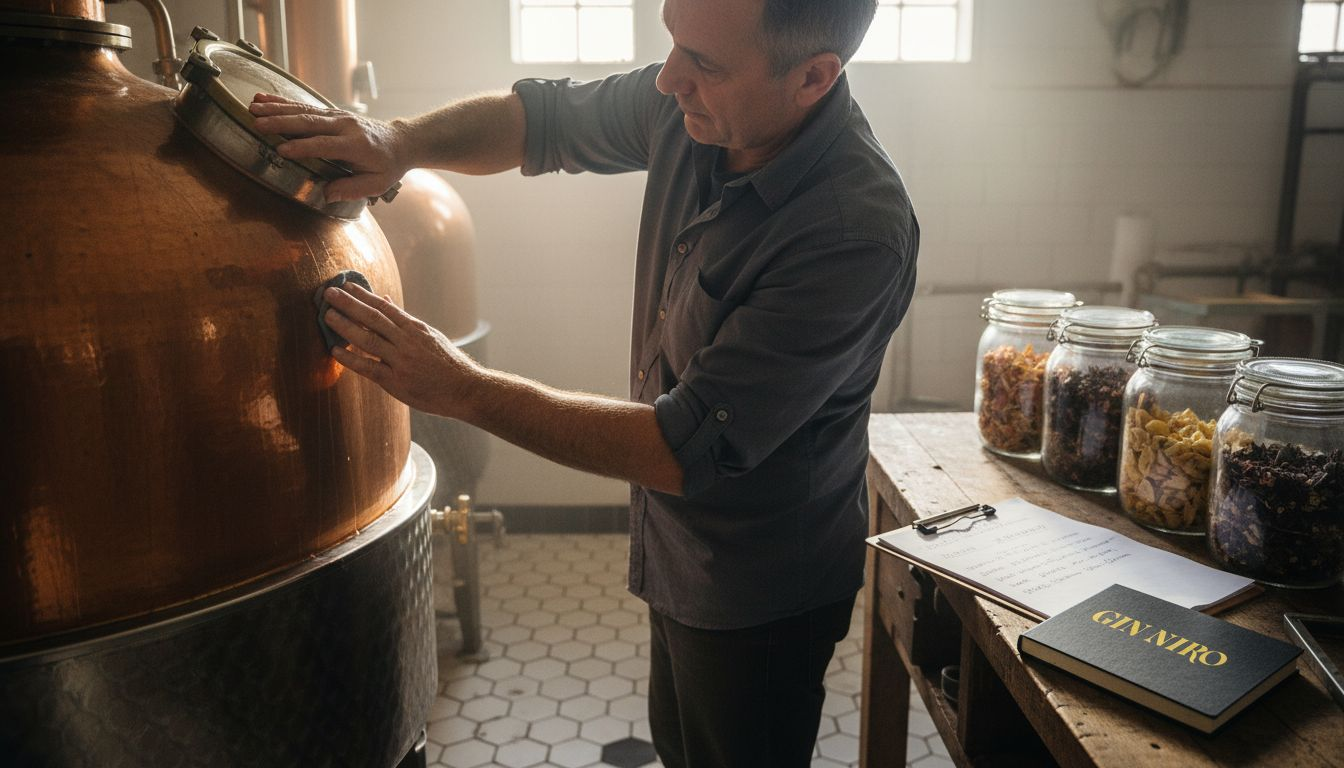
Copper stills offer unique advantages. The metal naturally removes sulfur compounds that create harsh flavors. It also catalyzes chemical reactions that soften the spirit and enhance botanical expression. Artisanal distillers value these properties despite higher production costs.
Gin tasting experts emphasize that base spirit quality significantly impacts the final gin’s flavor, with artisanal producers often using grape or wine-based spirits to complement Mediterranean botanicals.
Small-batch production allows precise control:
- Temperature adjustments protect delicate citrus oils
- Vapor pathway modifications optimize botanical extraction
- Heart cut selection ensures only the purest spirit reaches bottles
- Individual batch monitoring maintains consistent quality
Continuous industrial distillation sacrifices these refinements for speed. Column stills produce neutral spirits efficiently but strip away character. Mass-market brands then add botanical extracts or essences that lack the depth of true distillation.
The base alcohol’s character matters profoundly. Grape-based spirits bring fruity complexity that harmonizes with Mediterranean botanicals. Grain spirits offer clean canvases but less inherent interest. Quality producers select bases that complement their botanical vision.
Pro Tip: Smell gin before tasting to detect distillation quality. Harsh alcohol notes signal poor cuts or cheap base spirits, while smooth, integrated aromas indicate careful craftsmanship and premium ingredients.
Common misconceptions about gin quality
Several persistent myths mislead consumers about what truly defines premium gin. Clearing these misconceptions helps you make informed choices and appreciate quality properly.
The juniper dominance fallacy tops the list. High-quality gins maintain a balanced juniper presence, avoiding the misconception that stronger juniper flavor always equals better gin. Botanical harmony creates more interesting and versatile spirits.
Other widespread quality myths:
- Higher price automatically means superior quality (provenance matters more)
- London Dry style represents the pinnacle of gin (it’s just one category)
- Clear color indicates purity (barrel-aged and botanical-infused gins can be excellent)
- More botanicals create better complexity (balanced selection beats ingredient count)
- Premium packaging guarantees premium liquid (marketing often exceeds substance)
The London Dry confusion deserves special attention. This legal designation simply means no artificial flavors or colors added post-distillation. It says nothing about botanical quality, base spirit character, or distillation craftsmanship. Many exceptional Mediterranean gins fall outside this category because they embrace different production philosophies.
“Quality gin requires botanical balance where each ingredient contributes distinct character while supporting the overall flavor profile, creating harmony rather than competition among elements.”
Price confusion stems from marketing budgets rather than production costs. Established brands charge premium prices for recognition, not necessarily superior liquid. Conversely, talented artisanal distillers often underprice their products to build markets. Smart consumers evaluate ingredients, methods, and transparency instead of trusting price tags.
Comparing artisanal Mediterranean gins with mass-market options
Direct comparison reveals substantial differences between artisanal Mediterranean gins and industrial products. These distinctions affect every aspect from ingredients to final flavor.
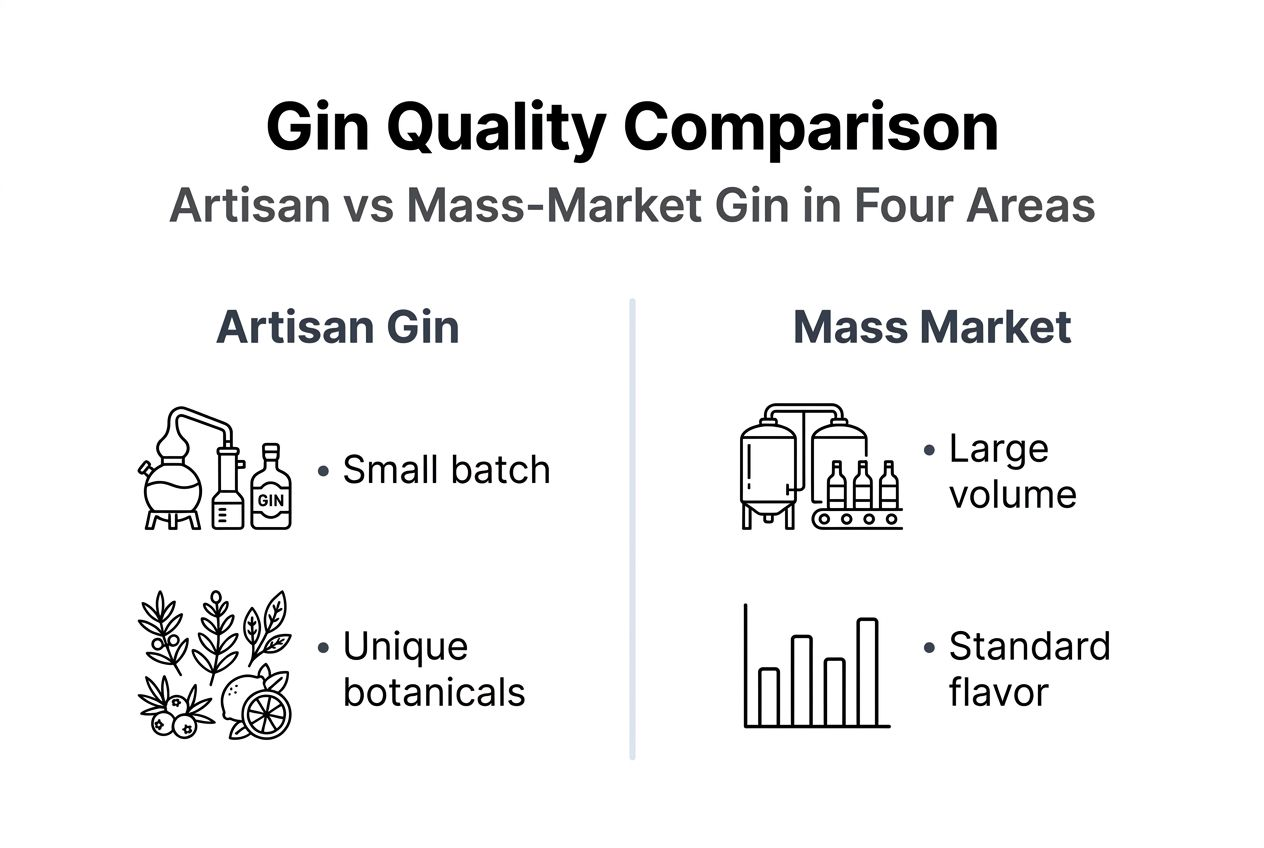
| Quality Aspect | Artisanal Mediterranean Gin | Mass-Market Gin |
|---|---|---|
| Botanical sourcing | Fresh, locally-sourced Mediterranean ingredients with provenance | Dried bulk botanicals or synthetic flavoring extracts |
| Distillation method | Small-batch copper pot stills with vapor infusion | Continuous column stills with post-distillation flavoring |
| Base spirit | Premium grape or grain spirits selected for character | Cheap neutral spirits prioritizing cost over quality |
| Flavor complexity | Layered, evolving taste with distinct botanical notes | One-dimensional or harsh with artificial sharpness |
| Production transparency | Batch numbers, botanical details, distiller information | Minimal disclosure, focus on marketing claims |
| Price-to-quality ratio | Higher upfront cost but superior value per sip | Lower price but compromised experience |
Mass-market gin production often uses synthetic flavors or large-scale neutral spirits, which sacrifice the nuanced botanical complexity and artisanal authenticity found in high-quality craft gins.
Key production differences:
- Artisanal distillers hand-select botanicals for each batch
- Industrial producers use standardized recipes optimized for consistency over character
- Small producers distill when botanicals reach peak freshness
- Large operations maintain year-round production regardless of ingredient quality
- Craft gins often rest post-distillation to integrate flavors
- Mass-market brands bottle immediately to maximize throughput
Pro Tip: Look for batch numbers and botanical origin details on labels to identify genuine artisanal gin. Authentic producers proudly share this information, while mass-market brands hide behind vague marketing language.
How gin quality enhances tasting and cocktail experiences
Premium gin quality transforms both neat sipping and cocktail creation. The balanced botanicals and smooth base spirits that define excellence deliver tangible benefits across all consumption occasions.
Gin quality affects both the sensory experience during sipping and the balance in cocktails, where high-quality gins provide a harmonious botanical backbone rather than overwhelming juniper or alcohol harshness.
Optimal ABV for versatility ranges from 40% to 47%. This strength carries botanical oils effectively while remaining smooth enough for sipping. Higher proofs can overwhelm delicate mixers, while lower strengths lack presence in complex cocktails.
Sensory benefits during neat tasting:
- Smooth mouthfeel without harsh alcohol burn
- Evolving aroma as the glass warms in your hand
- Distinct botanical layers revealing themselves progressively
- Clean finish that invites the next sip rather than demanding a mixer
Cocktail applications showcase quality differently. Premium gins maintain their character even when mixed, contributing botanical complexity rather than disappearing. A Martinez or Negroni built with artisanal Mediterranean gin offers depth that mass-market options cannot match.
Mediterranean gin pairing suggestions:
- Tonic water with fresh thyme and lemon for herbal brightness
- Prosecco in a French 75 variation celebrating citrus notes
- Mediterranean tonic with rosemary and pink grapefruit
- Olive brine in a dirty martini that honors savory botanicals
- Fresh basil and lime in a summery Collins variation
Food pairing enhances appreciation further. The herbal qualities in quality Mediterranean gins complement seafood, grilled vegetables, and olive oil-based dishes. This gastronomic versatility extends gin’s role beyond simple cocktails into culinary experiences.
Challenges and realities of maintaining quality in artisan gin production
Artisanal gin producers face significant obstacles while maintaining the quality standards that distinguish their products. Understanding these challenges deepens appreciation for authentic craft spirits.
Regulatory hurdles vary across European markets:
- Complex licensing requirements increase startup costs
- Labeling laws restrict how producers communicate botanical details
- Tax structures often favor large producers over small distilleries
- Cross-border sales require navigating multiple regulatory frameworks
Balancing authenticity with scalability presents constant tension. Small batches ensure quality control but limit market reach. Expanding production risks diluting the hands-on craftsmanship that creates excellence. Successful artisanal producers grow carefully, often refusing to compromise standards even when demand exceeds capacity.
Transparency and traceability build consumer trust but add complexity:
- Sourcing documented botanicals costs more than bulk ingredients
- Batch-level tracking requires sophisticated inventory systems
- Sharing production details invites scrutiny and competitive copying
- Educating consumers about quality takes time and resources
European consumers driving the artisanal gin renaissance prioritize provenance, authenticity, and unique botanical blends that celebrate regional characteristics, fueling demand for high-quality Mediterranean gins.
Market realities favor quality despite challenges. Educated consumers increasingly seek authentic experiences over mass-market uniformity. This demand supports premium pricing that makes artisanal production economically viable. The gin renaissance of the 2020s created space for producers who refuse to compromise.
Supply chain vulnerabilities affect small producers disproportionately. Botanical availability fluctuates with harvests, forcing recipe adaptations. Glass shortages and shipping delays impact cash flow. These practical challenges require resilience and creativity to overcome while maintaining consistent quality.
Summary: appreciating and choosing high-quality Mediterranean gin
Recognizing and selecting premium Mediterranean gin becomes straightforward once you understand core quality principles. These insights empower confident purchasing decisions and deeper appreciation.
Quality pillars to remember:
- Botanical integrity through fresh, authentic Mediterranean ingredients
- Distillation craftsmanship using small-batch copper still methods
- Sensory balance where no single element dominates
- Base spirit purity that supports rather than obscures botanicals
- Producer transparency regarding sourcing and methods
Checklist for identifying genuine artisanal Mediterranean gin:
- Specific botanical provenance listed (Sicilian citrus, not just “citrus”)
- Batch numbers or production date on bottles
- Named distiller or producer location
- Natural ingredients without artificial flavoring
- Reasonable price reflecting quality ingredients and methods
- Detailed tasting notes describing complexity
Adventurous tasting deepens appreciation. Try gins neat at room temperature to detect botanical layers. Compare similar styles side by side to calibrate your palate. Experiment with different mixers and garnishes to discover how quality affects cocktail balance.
Apply these insights when purchasing. Read labels critically, research producers online, and ask retailers about sourcing. Your informed choices support artisanal distillers who prioritize quality over profit margins, encouraging the entire industry toward higher standards.
Discover quality Mediterranean gin at Gin Niro
Ready to experience the botanical harmony and artisanal craftsmanship this guide describes? Gin Niro embodies every quality principle discussed here.
Our Mediterranean gin showcases authentic Sicilian citrus and aromatic zibibbo grapes distilled in small batches using traditional copper stills. Every bottle reflects our commitment to botanical integrity, transparent sourcing, and sensory excellence. We share complete provenance details because quality deserves recognition.
Explore our artisanal offerings and taste the difference that genuine Mediterranean quality creates. Whether you’re sipping neat or crafting cocktails, Gin Niro delivers the balanced complexity that transforms ordinary moments into memorable experiences. Visit our collection today and join the renaissance of authentic gin appreciation.
Frequently asked questions
What defines Mediterranean-style gin compared to other regions?
Mediterranean-style gin emphasizes sun-grown botanicals like citrus, herbs, and sometimes grapes or olives rather than focusing primarily on juniper. These gins showcase culinary influences and gastronomic versatility that pair naturally with Mediterranean cuisine. The style celebrates regional terroir and artisanal production methods.
How can I tell if a gin is truly artisanal?
Look for specific botanical sourcing details, batch numbers, and named distillers on labels. Authentic artisanal producers share transparency about methods and ingredients. Check for copper still distillation mentions and small-batch production claims you can verify through producer websites or direct contact.
Does higher price always mean better gin quality?
No, price reflects marketing budgets and brand recognition as much as liquid quality. Evaluate botanical sourcing, distillation methods, and producer transparency instead. Some talented artisanal distillers underprice their products to build markets, while established brands charge premiums for name recognition rather than superior ingredients.
Why is juniper balanced with other botanicals rather than dominant?
Balanced botanical blends create more complex and versatile flavor profiles than juniper-forward spirits. Quality gin aims for harmony where each ingredient contributes distinct character while supporting the whole. Excessive juniper can overwhelm delicate notes and limit food pairing or cocktail applications.
What are the best ways to enjoy premium Mediterranean gin?
Try it neat at room temperature first to appreciate botanical layers fully. Use quality tonic water with fresh Mediterranean garnishes like thyme or rosemary. Experiment with cocktails that highlight rather than mask the gin’s character, such as Martinis or botanical-forward Collins variations. Pair with Mediterranean cuisine to explore gastronomic synergies.

