

Discovering a gin that truly captures the spirit of Sicily means diving into a world shaped by Mount Etna, Mediterranean terroir, and hand-harvested botanicals. For those who seek more than just another premium pour, Sicilian gin traditions offer a sensory landscape where citrus, wild herbs, and elegant aromatics shine. This experience presents the secrets behind tasting, pairing, and identifying authentic artisanal quality—equipping you to savor gin as only the Mediterranean can inspire.
Table of Contents
- Step 2: Prepare Authentic Mediterranean Gin Tastings
- Step 3: Pair Sicilian Gin With Complementary Foods
- Step 4: Verify Artisanal Quality And Tasting Notes
Quick Summary
| Key Point | Explanation |
|---|---|
| 1. Use proper glassware for tastings | Tulip-shaped glasses concentrate aromas, enhancing the tasting experience of Mediterranean gins. |
| 2. Taste in a deliberate order | Start with light gins, moving to heavier profiles to avoid overwhelming your palate. |
| 3. Pair gin with complementary foods | Match gin profiles to dishes, enhancing flavors and creating memorable dining moments. |
| 4. Verify artisanal quality of gins | Look for local botanicals and detailed labeling to ensure authenticity and craftsmanship. |
| 5. Evaluate tasting notes carefully | Identify distinct botanical layers and a complex finish to distinguish quality gins from lower alternatives. |
…
Step 2: Prepare authentic Mediterranean gin tastings
Authentic Mediterranean gin tastings reveal the complexity and regional character of Sicilian spirits. You’ll learn to structure a tasting that highlights aromatics, flavors, and the terroir that makes each gin unique.
Start by gathering your tasting essentials. You need proper glassware, ideally tulip-shaped glasses that concentrate aromatics toward your nose. Pour small measures, around 30 milliliters per gin, so you can taste multiple expressions without overwhelming your palate.
Arrange your tasting in a specific order.
- Begin with the lightest, most delicate gin first
- Progress to fuller-bodied, more complex expressions
- Finish with the most botanically intense options
This sequence prevents heavy flavors from masking subtle ones. Between tastings, cleanse your palate with plain water and neutral crackers.
Observe the visual characteristics before tasting. Quality Sicilian gins often display clarity and pale golden hues from their citrus and herbal botanicals. Notice how light passes through the spirit.
Engage your sense of smell next. Swirl the glass gently and inhale deeply. Identify bergamot, citrus notes, wild herbs, and any floral elements. Most of what you perceive as taste actually comes from aroma.
Proper glassware and deliberate ordering transform a casual sip into a meaningful exploration of Mediterranean flavor.
Now taste slowly. Let the spirit coat your mouth for a few seconds before swallowing. Notice the initial flavors, mid-palate development, and the lingering finish. Take notes on what you detect.
Consider how these gins pair with food. Understanding Mediterranean food and gin pairing enriches your appreciation for how Sicilian botanicals complement regional cuisine.
Pro tip: Taste these gins at room temperature or slightly chilled, never ice-cold, since cold numbs your taste buds and obscures the delicate Mediterranean botanicals that make Sicilian gin distinctive.
Step 3: Pair Sicilian gin with complementary foods
Pairing Sicilian gin with food transforms both the spirit and the meal into something greater than either alone. You’ll discover how the botanicals in your gin enhance traditional Mediterranean dishes and create memorable dining moments.
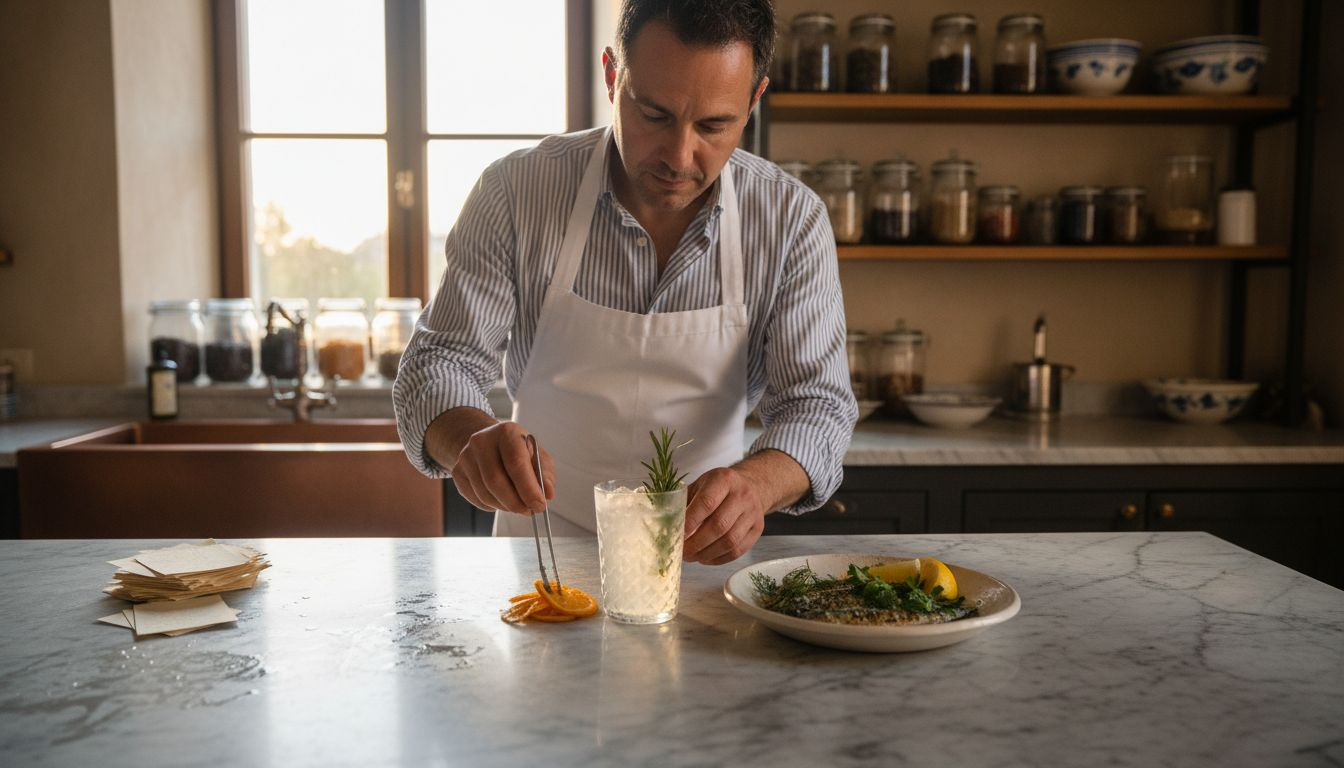
Start by understanding your gin’s flavor profile. Sicilian gins emphasize citrus, wild herbs, and Mediterranean botanicals like juniper and wild fennel. These characteristics guide which foods work best with your selection.
Match gin profiles to dish types strategically.
- Citrus-forward gins complement seafood, fresh vegetables, and light appetizers
- Herbaceous gins enhance caramelized vegetables, cured meats, and aromatic preparations
- Floral gins work beautifully with delicate cheeses and fruit-based dishes
Consider classic Sicilian dishes. Sicilian cuisine pairs wonderfully with gin through the natural affinity of its ingredients. Caponata’s salty capers and eggplant complement gin’s botanical complexity. Arancini’s crispy exterior and savory rice filling balance gin’s bright citrus notes. Grilled swordfish with lemon sauce directly echoes the citrus botanicals in your glass.
Use this summary to match Sicilian gin styles with ideal Mediterranean foods:
| Gin Profile | Suggested Food Pairings | Flavor Harmony Example |
|---|---|---|
| Citrus-forward | Grilled fish, fresh salads | Lemon-soaked swordfish |
| Herbaceous | Cured meats, savory vegetables | Arancini with herbs |
| Floral | Soft cheeses, fruit desserts | Ricotta with candied orange peel |
Think about textural contrasts too. Gin’s crispness cuts through rich, buttery foods. It cleanses your palate between bites of intensely flavored dishes. This interplay keeps your taste experience dynamic.
The salty and aromatic complexity of Sicilian gin enhances traditional local dishes for an authentic Mediterranean pairing experience.
Experiment with temperature and serving style. A chilled gin serves seafood better than one at room temperature. An ice-cold pour awakens citrus notes that complement lighter fare. A slightly warmed measure releases herbal aromatics that pair with heartier preparations.
Start with smaller pours alongside food. Notice how flavors evolve as you alternate between sips and bites. Let the gin’s botanicals interact with your dish’s seasonings. This active tasting reveals unexpected harmonies.
Pro tip: Begin your food pairing exploration with simple, high-quality ingredients like fresh seafood or aged cheese, which allow your gin’s botanicals to shine without competing flavors overwhelming the pairing.
Step 4: Verify artisanal quality and tasting notes
Verifying artisanal quality separates exceptional Sicilian gins from mass-produced alternatives. You’ll learn to identify markers of genuine craftsmanship and understand the tasting notes that reveal a spirit’s true character.
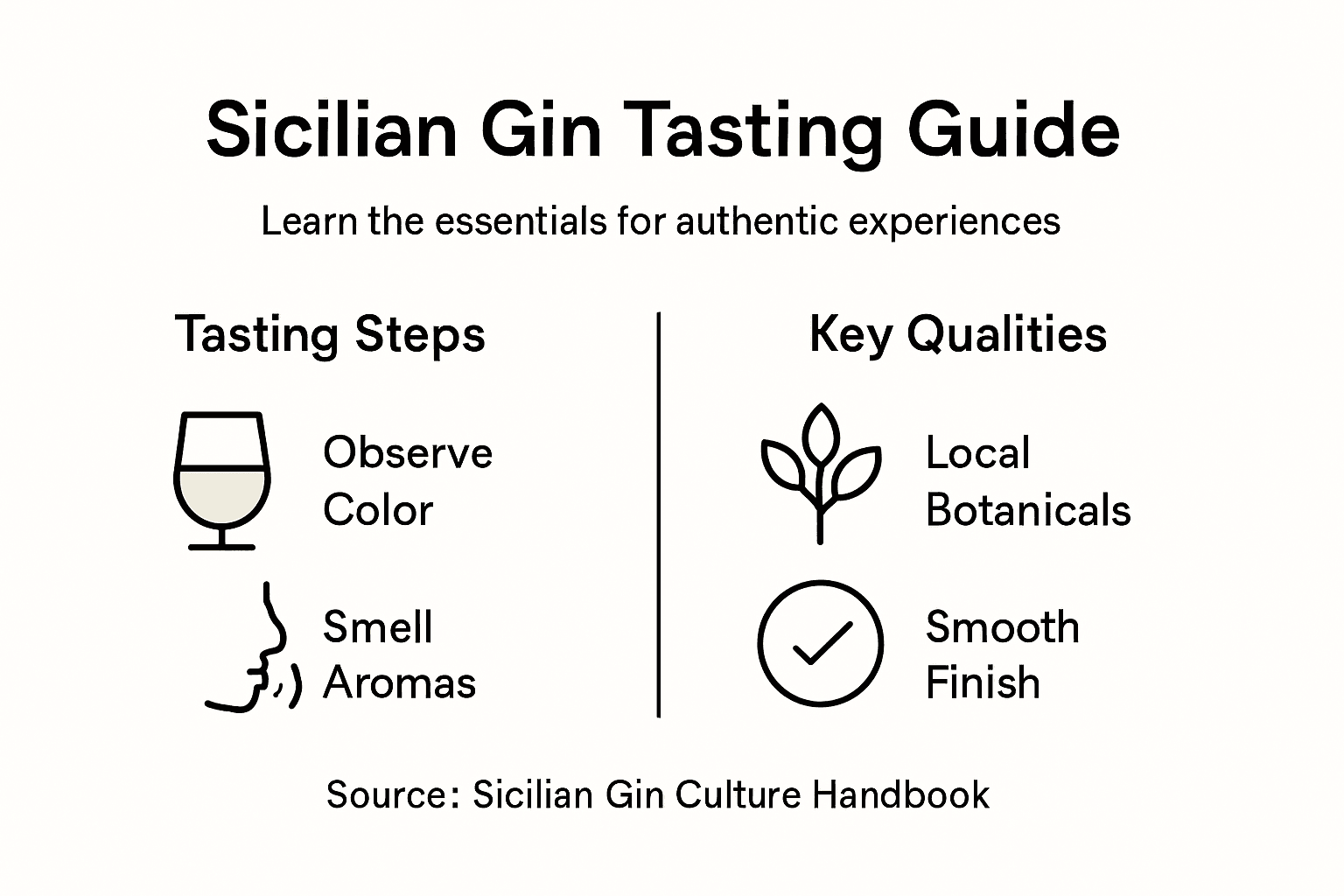
Start by examining the ingredient sourcing. Authentic artisanal gins use hand-harvested botanicals from specific regions, often near Mount Etna. Check the label for mention of local sourcing. Mass-produced gins rarely highlight where botanicals come from.
Assess the distillation methods next.
- Traditional small-batch distillation preserves essential oils and delicate aromatics
- Vapor infusion techniques create subtle, refined flavor profiles
- Maceration processes that extend steeping time yield greater complexity
- Batch sizes under 500 liters indicate artisanal commitment rather than industrial scale
Look at the bottle presentation. Artisanal producers invest in quality glass, thoughtful labeling, and transparent information about production. If a label lacks details about distillation or botanicals, that’s a red flag.
Here’s a quick reference guide to identifying genuine Sicilian artisanal gin:
| Identification Aspect | What to Look For | Significance |
|---|---|---|
| Ingredient Sourcing | Local botanicals, Mt. Etna origin | Highlights terroir and authenticity |
| Distillation Method | Small-batch, vapor infusion | Preserves delicate aromas |
| Bottle Presentation | Detailed labels, quality glass | Indicates craftsmanship |
| Tasting Notes | Complex layers, evolving finish | Reflects artisanal expertise |
Now evaluate the tasting experience. Pour a small measure and engage all your senses. Hand-harvested botanicals and refined distillation create a complex interplay of citrus, juniper, and herbal aromas reflecting Mediterranean terroir. Notice whether you detect distinct botanical layers or a flat, one-dimensional profile.
Identify signature flavor notes in quality Sicilian gin.
- Bright citrus from Bianchetto lemon and bergamot
- Floral hints from orange blossoms and wild violet
- Herbal complexity from wild fennel and rosemary
- Mineral undertones from volcanic terroir
The finish matters significantly. Artisanal gins deliver a lingering, evolving finish. Industrial gins fade quickly or feel hot and thin on your palate.
Elegance, aromatic intensity, and distinct regional character differentiate true Sicilian artisanal gins from lesser expressions.
Trust your instincts about balance. Does the gin feel harmonious or disjointed? Can you identify individual botanicals, or does everything blend into one flavor? Quality spirits reward your attention with nuance.
Pro tip: Compare multiple Sicilian gins side by side to train your palate, noting which ones display the greatest aromatic complexity and longest, most evolving finishes compared to their peers.
Discover the Spirit of Sicilian Gin with Gin Niro
Unlock the rich tradition of Mediterranean gin culture by experiencing authentic Sicilian craftsmanship firsthand. This guide highlights challenges like identifying artisanal quality, mastering the delicate balance of botanicals, and pairing gins with complementary Mediterranean flavors. If you seek to deepen your appreciation for these unique spirits and want to taste the essence of Sicily in every sip, Gin Niro offers an exceptional solution crafted from zibibbo grapes and Sicilian citrus using traditional distillation methods that preserve the spirit’s aromatic complexity and cultural heritage.
Begin your journey by exploring the Homepage – Gin Niro where you will find detailed descriptions of our premium 70cl bottle and tasting notes inspired by the Mediterranean terroir. Embrace the elegance and refined flavors that set true artisanal gin apart and elevate your Mediterranean tasting experience today at ginniro.it. Don’t wait to indulge in a memorable sensory adventure that ties tradition, quality, and sophistication in every bottle.
Frequently Asked Questions
How do I prepare for a Sicilian gin tasting?
To prepare for a Sicilian gin tasting, gather tulip-shaped glassware, water, and neutral crackers for palate cleansing. Pour about 30 milliliters of each gin, starting with the lightest before progressing to fuller-bodied options to highlight the unique flavors of each spirit.
What are the best food pairings for Sicilian gin?
Sicilian gin pairs well with Mediterranean foods that complement its botanical profile. Citrus-forward gins are great with seafood, while herbaceous ones enhance cured meats and vegetables. Experiment with simple ingredients to see how they enhance the gin’s flavors.
How can I identify artisanal quality in Sicilian gin?
To identify artisanal quality in Sicilian gin, look for gins made from local, hand-harvested botanicals and examine the distillation method used. Authentic gins often highlight their ingredient sourcing and offer complex flavor profiles, unlike mass-produced alternatives.
What sensory aspects should I focus on when tasting Sicilian gin?
When tasting Sicilian gin, focus on visual clarity, aromatic characteristics, and mouthfeel. Observe the color, swirl the glass to release aromas, and take small sips to identify different flavor layers and the finish on your palate.
How do traditional Sicilian botanicals influence the taste of gin?
Traditional Sicilian botanicals, such as citrus fruits and wild herbs, contribute to the distinct flavor and aroma profile of gin. Explore the botanicals present in your gin to better understand how their regional character enhances the overall tasting experience.
Why is the order of tasting important during a Sicilian gin tasting?
The order of tasting is important because it prevents heavier flavors from overpowering lighter ones. Start with the most delicate gin and gradually move to more intense expressions to fully appreciate the unique characteristics of each spirit.


