

Every discerning gin lover knows that the heart of gin is found in its botanicals, yet few ingredients command the level of respect as juniper. At the core of every great gin lies the unmistakable piney character delivered by Juniperus communis, the small berry that is both the legal and sensory backbone of the spirit. For those who treasure Mediterranean elegance in their glass, discovering how juniper shapes iconic gins like Gin Niro reveals why this botanical is more than tradition—it is gin’s defining soul.
Table of Contents
- Juniper Defined: The Essential Gin Botanical
- How Juniper Shapes Gin Flavor and Aroma
- Varieties of Juniper Used in Gin Production
- Mediterranean Juniper in Premium Gins Like Gin Niro
- Common Juniper Myths and Quality Considerations
Key Takeaways
| Point | Details |
|---|---|
| Juniper is Essential for Gin | Without juniper, a spirit cannot be classified as gin, as it must be the predominant flavor according to legal standards. |
| Flavor Complexity from Juniper | Juniper provides a unique combination of piney, citrusy, and resinous notes that form the backbone of gin’s flavor profile. |
| Importance of Juniper Sourcing | The origin and quality of juniper seriously impact the flavor and identity of the gin, with Mediterranean varieties typically offering brighter, more nuanced profiles. |
| Extraction Methods Matter | Techniques like maceration and vapor infusion shape how juniper’s character emerges, altering the final taste experience of the gin. |
Juniper Defined: The Essential Gin Botanical
Without juniper, there is no gin. This distinction matters because gin’s legal definition rests on juniper’s presence and prominence.
Juniper is Juniperus communis, a small aromatic berry that forms the absolute backbone of every gin. It’s not one botanical among many—it’s the defining ingredient that separates gin from other spirits.
What Makes Juniper the Gin Standard
The European Union legally mandates that juniper must be the predominant flavor in any spirit labeled as gin. This isn’t arbitrary. It reflects centuries of tradition and the botanical’s unmatched ability to anchor a spirit’s character.
Juniper delivers a complex flavor profile that sophisticated gin drinkers immediately recognize:
- Piney notes that evoke forest floor and resin
- Citrusy undertones that brighten the overall profile
- Resinous qualities that provide depth and structure
- Spicy, woody accents that add complexity
These characteristics make juniper irreplaceable. Other botanicals complement it, but juniper remains the anchor.
Juniper is gin’s non-negotiable foundation—remove it, and you no longer have gin, you have flavored spirit.
The Botanical’s Role in Distillation
During distillation, juniper’s volatile oils release gradually, infusing the spirit with its signature character. The berry’s aromatic compounds react differently depending on heat, timing, and the presence of other botanicals.
This is why juniper selection matters. Different juniper sources—Mediterranean varieties versus Nordic strains—produce distinct flavor profiles that influence the final spirit.
Juniper in Premium Gin Production
Gin aficionados recognize that juniper quality directly impacts the final product. Mediterranean-style gins often showcase juniper’s citrus-forward characteristics more prominently than traditional London Dry styles.
When exploring gin botanicals and their distinct roles, juniper remains the constant reference point against which all other ingredients are measured.
Pro tip: When tasting gin, pause to identify juniper’s piney backbone first, then notice how other botanicals layer over it—this tasting approach reveals distillation quality immediately.
How Juniper Shapes Gin Flavor and Aroma
Juniper doesn’t just sit alongside other botanicals in gin—it orchestrates the entire flavor profile. Understanding how this single berry defines the spirit reveals why gin aficionados recognize juniper first in every tasting.
Juniper’s flavor compounds work differently depending on extraction methods. The choice between maceration and vapor infusion directly impacts which aromatic notes emerge in your glass.
The Foundation Every Other Botanical Builds Upon
Think of juniper as the architectural blueprint for gin. Piney and resinous characteristics establish the spirit’s base, creating the framework where citrus peels, spices, florals, and herbs can layer complexity without overwhelming the drink.
This layering matters. Without juniper’s structure, these supporting botanicals would compete chaotically rather than harmonize.
Juniper’s aromatic profile includes:
- Piney backbone that defines gin’s core character
- Resinous notes that provide weight and depth
- Subtle lavender hints that soften harsh edges
- Pepper undertones that add warmth
- Citrus whispers that brighten the finish
These aren’t random flavors. They emerge because juniper berries naturally contain these volatile compounds.
Juniper is gin’s flavor anchor—remove it and supporting botanicals lose their context, becoming scattered notes rather than a cohesive experience.
How Extraction Methods Reveal Different Juniper Expressions
Maceration steeps juniper longer, pulling deeper resinous qualities into the spirit. Vapor infusion, by contrast, captures lighter, more aromatic elements while preserving delicate citrus notes.
Mediterranean-style gins often favor vapor infusion to highlight juniper’s brighter citrus characteristics. Traditional approaches lean toward maceration for bolder, woodier profiles.
The method you choose shapes whether juniper feels forward and crisp or complex and contemplative.
Juniper’s Role in Gin Identity
Gin’s legal definition centers on juniper dominance, but this reflects deeper truth. The aroma in gin fundamentally depends on how juniper’s volatile oils interact with heat, time, and other botanicals during distillation.
When you taste gin, juniper’s presence either grounds the experience or disrupts it. Quality distillers understand this balance intimately.
Pro tip: Taste juniper-forward on the inhale by nosing the gin before sipping, then notice how supporting botanicals emerge only after juniper’s piney backbone registers—this two-step approach reveals distillation craftsmanship.
Varieties of Juniper Used in Gin Production
Not all juniper berries taste the same. While Juniperus communis dominates gin production worldwide, distillers recognize that regional origin, harvest timing, and processing methods create measurable flavor differences that shape the final spirit.
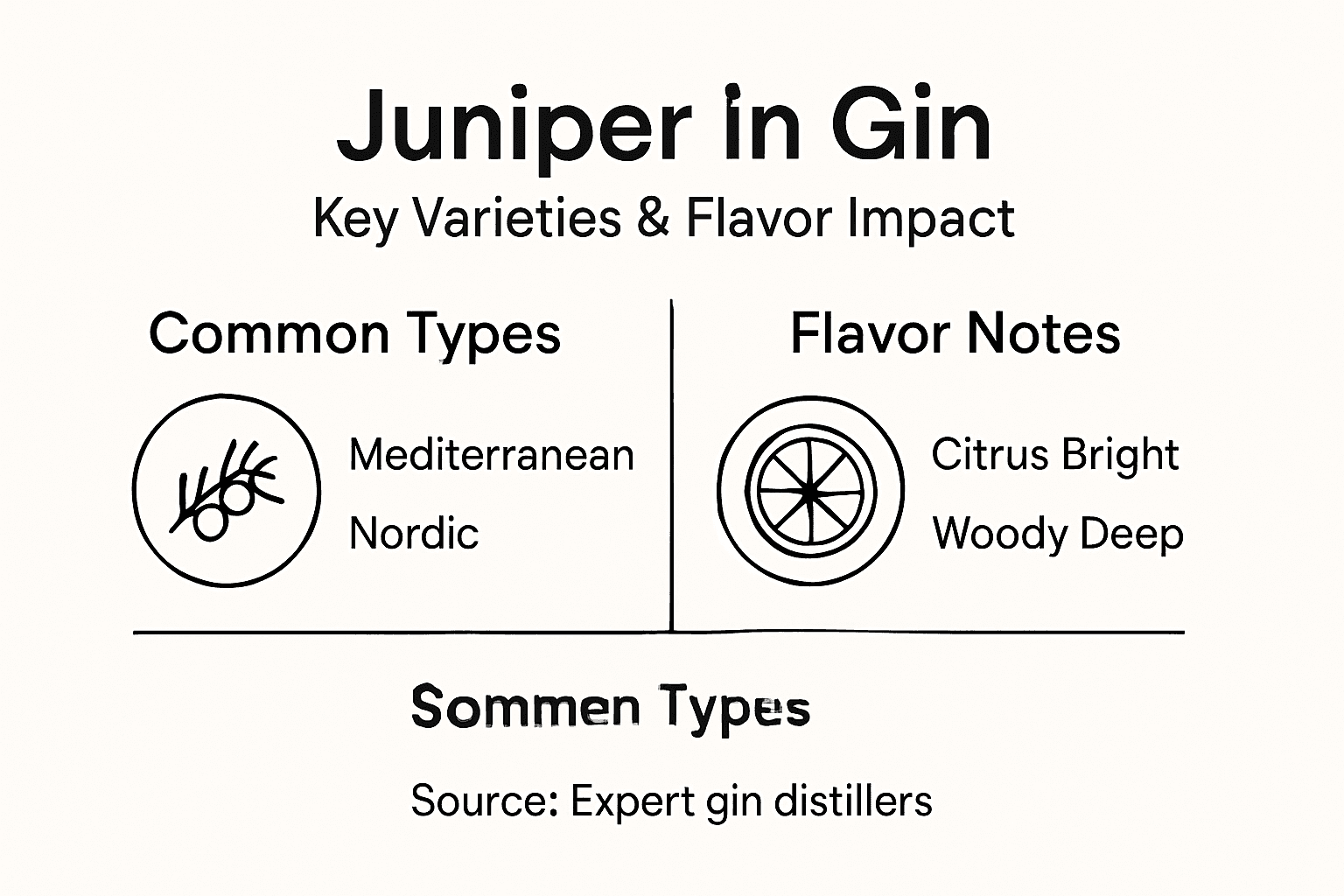
Choosing the right juniper variety directly impacts whether your gin expresses bright Mediterranean character or deep, woody complexity.
Juniperus Communis: The Standard Bearer
Common juniper remains the primary species used across the industry because it consistently delivers the piney, resinous backbone gin requires. However, juniper berries vary by source and harvest year, affecting volatile compound concentrations and the aromatic profile distillers achieve.
This variation isn’t a flaw—it’s opportunity. Distillers use it strategically to craft distinct expressions.
Key factors affecting juniper quality include:
- Geographic origin (Nordic, Mediterranean, Eastern European)
- Harvest year and seasonal conditions
- Drying methods (sun-dried, kiln-dried, or fresh)
- Berry maturity at harvest
- Storage duration before distillation
Each variable shifts the chemical profile measurably, which is why experienced distillers source juniper from specific regions repeatedly.
Juniper selection is where distillers reveal their vision—the same species produces wildly different gins depending on sourcing choices.
Beyond Common Juniper: Regional Subspecies
Although nearly 70 juniper species exist worldwide, only a handful appear in commercial gin production. Different subspecies thrive in distinct soil and climate conditions, developing unique flavor and aroma characteristics.
Mediterranean juniper subspecies tend toward brighter, citrus-forward profiles. Nordic varieties develop deeper, more austere piney notes. Eastern European sources often deliver peppery, spiced undertones.
Here’s how different juniper origins influence gin style:
| Juniper Origin | Typical Flavor Effects | Ideal Gin Styles |
|---|---|---|
| Mediterranean | Bright, citrusy, floral | Contemporary, Mediterranean |
| Nordic | Deep pine, austere, woody | Classic London Dry |
| Eastern European | Peppery, spiced, robust | Spiced and traditional |
Distillers select juniper based on desired flavor outcome, terroir expression, and availability.
Drying Methods Shape Volatile Compounds
How juniper berries are dried dramatically impacts which volatile compounds concentrate in the final product. Sun-drying in Mediterranean climates produces lighter, more aromatic berries. Kiln-drying develops richer, more resinous characteristics.
Fresh, undried juniper creates sharper, more herbaceous notes that fade quickly.
Juniper’s Sourcing Strategy
Premium gin producers often work with specific juniper suppliers for years, building relationships around consistent quality. This commitment reveals how seriously distillers treat botanical sourcing.
When exploring gin ingredients and Mediterranean flavor profiles, you’re really exploring juniper sourcing decisions. The berry chosen determines everything that follows.
Pro tip: When tasting different gins, note whether juniper tastes bright and citrusy or deep and woody, then ask the distiller where their juniper originates—this single detail reveals their entire production philosophy.
Mediterranean Juniper in Premium Gins Like Gin Niro
Mediterranean juniper tells a different story than Nordic or Eastern European sources. It delivers brightness, citrus lift, and aromatic finesse that classic gin styles simply cannot match. Gin Niro demonstrates this distinction perfectly.
When juniper comes from Mediterranean terroir, the entire spirit transforms into something lighter, more elegant, and undeniably regional.
The Mediterranean Juniper Difference
Mediterranean juniper berries develop their character under intense sun, poor soil conditions, and maritime influences. These stressors concentrate volatile oils differently than juniper grown in colder climates.
The result? Brighter piney notes without aggressive harshness. More citrus transparency. A softer, more refined aromatic profile that invites you to explore rather than dominate.
Key characteristics of Mediterranean juniper include:
- Lighter piney tone that feels elegant
- Pronounced citrus affinity that brightens other botanicals
- Floral undertones that add softness
- Spice-friendly nature that allows supporting botanicals to shine
- Persistent aroma without overwhelming intensity
These qualities make Mediterranean juniper ideal for distillers seeking balance over power.
Mediterranean juniper doesn’t shout—it whispers with precision, creating gins where every botanical plays its part without competing for dominance.
How Gin Niro Showcases Mediterranean Juniper
Gin Niro uses Mediterranean juniper as its foundation, enhanced by a carefully chosen botanical ensemble that includes Sicilian lemon and orange peel, ginger, coriander, angelica, and Madagascar Bourbon vanilla. This combination demonstrates how Mediterranean juniper and regional citrus create balanced flavor profiles.
The juniper establishes the piney backbone while the Sicilian citrus adds brightness that feels natural rather than forced. Ginger and coriander layer subtle warmth beneath.
The result is a soft, persistent gin at 40% alcohol that feels Mediterranean in every sip—not because it shouts Sicilian origin, but because every element works in harmony.
Why This Matters to Gin Aficionados
Mediterranean-style gins like Gin Niro represent a deliberate shift away from London Dry dominance. They showcase how terroir, juniper sourcing, and supporting botanicals create entirely new flavor possibilities.
When you taste Mediterranean gin ingredients and their flavor impact, you’re experiencing what happens when distillers prioritize balance and regional character over tradition.
This approach reveals juniper’s true versatility—it adapts to its environment and adapts to the distiller’s vision.
Pro tip: Taste Gin Niro neat first to appreciate how Mediterranean juniper’s brightness balances with Sicilian citrus, then try it in a gin and tonic with premium Mediterranean tonic to see how juniper’s aromatic profile shifts with carbonation.
Common Juniper Myths and Quality Considerations
Juniper carries centuries of folklore. Some claims about mystical protection, fertility enhancement, or healing powers persist in popular culture. But modern gin production separates mythology from science, focusing instead on botanical consistency and environmental realities.
Understanding what actually matters for juniper quality helps you appreciate premium gins like Gin Niro for the right reasons.
Separating Folklore from Botanical Fact
Historically, juniper mythology linked the tree to protection and healing across various traditions. Medieval herbalists prescribed juniper remedies. Ancient cultures assigned spiritual significance to juniper groves.
These stories are culturally rich. They’re also not scientifically supported.
Modern quality control ignores mystical claims entirely. Instead, distillers focus on:
- Botanical consistency across harvest years
- Volatile oil concentration in berries
- Flavor profile stability from batch to batch
- Absence of contaminants or degradation
- Proper storage conditions before distillation
These factors determine gin quality. Mythology adds cultural context but nothing to your glass.
Premium gin quality depends on environmental science and rigorous testing, not folklore or traditional healing claims.
What Actually Determines Juniper Quality
Environmental factors drive juniper quality far more than any mystical properties. Juniper regeneration and quality depend on soil richness, pH levels, and land management, not cultural narratives.
Juniper thrives in nutrient-rich soils with appropriate moisture and minimal competing vegetation. These conditions produce berries with optimal volatile oil profiles.
Poor growing conditions yield inferior berries regardless of traditional significance.
Below is a summary of factors that impact juniper’s quality and therefore gin’s final character:
| Quality Factor | Effect on Juniper | Influence in Gin |
|---|---|---|
| Harvest Timing | Alters maturity, oil content | Shifts resin and citrus balance |
| Drying Method | Modifies aroma profile | Adjusts weight and brightness |
| Berry Storage | Prevents aroma loss | Maintains flavor integrity |
| Soil & Climate | Shapes berry size and flavor | Impacts overall gin expression |
Quality Markers You Should Know
When evaluating gin, look for these actual quality indicators:
- Berry maturity at harvest (affects volatile compounds)
- Drying method (sun versus kiln changes flavor)
- Storage duration and conditions (oxidation impacts quality)
- Botanical sourcing transparency (distiller’s knowledge matters)
- Flavor consistency across bottles (quality control works)
Distillers who understand juniper ecology produce superior gins. Those chasing mythology produce marketing copy.
Why This Matters to Discerning Drinkers
Gin Niro succeeds because it applies rigorous botanical science to Mediterranean terroir. The juniper quality reflects growing conditions, harvest timing, and distillation expertise—not mystical properties.
When tasting premium gins, appreciate the actual work: sourcing, testing, blending, and refinement. These create excellence far more effectively than folklore ever could.
Pro tip: When comparing gins, ask the distiller about their juniper’s growing region, soil conditions, and harvest timing rather than any historical or cultural claims—these details reveal their commitment to actual quality.
Discover the True Impact of Juniper in a Premium Mediterranean Gin Experience
The article sheds light on how juniper is the essential botanical that defines gin’s character, with its piney and citrusy notes that create a harmonious flavor profile. If you are searching for a gin that masterfully balances juniper’s brightness and aromatic complexity, embracing Mediterranean terroir, your quest ends here. At Homepage – Gin Niro, we offer an artisanal gin crafted around premium Mediterranean juniper, enhanced by Sicilian citrus and traditional distillation methods to deliver the elegance and refinement that true gin connoisseurs appreciate.
Taste the difference that expert botanical selection and regional sourcing make by exploring Gin Niro today at https://ginniro.it. Experience a gin where juniper is not just an ingredient but the spirit’s identity, inviting you to savor every piney and citrus note with sophistication and balance. Take the next step in your gin journey—discover the articulation of juniper’s aromatic impact that only Gin Niro can provide.
Frequently Asked Questions
What is the primary role of juniper in gin?
Juniper is the defining ingredient in gin, providing its unique flavor profile. It must be the predominant flavor in any spirit labeled as gin, as mandated by EU regulations.
How does juniper influence the flavor of gin?
Juniper imparts complex flavors, including piney notes, citrusy undertones, resinous qualities, and spicy accents. It anchors the spirit’s character and allows other botanicals to complement its profile.
What are the different extraction methods for juniper in gin production?
The two primary extraction methods are maceration and vapor infusion. Maceration pulls deeper resinous qualities into the spirit, while vapor infusion captures lighter citrus elements, impacting the overall flavor.
How does the quality of juniper berries affect gin?
The quality of juniper berries significantly influences the final gin product. Factors such as geographic origin, harvest conditions, drying methods, and storage can all alter the flavor and aroma of the resulting gin.


