

Every discerning gin enthusiast knows that a truly memorable spirit is never just about flavor. In a world where Mediterranean botanicals and artisanal techniques compete for your senses, the narrative behind each bottle provides a deeper level of connection. A genuinely compelling gin story reveals not only heritage and craftsmanship but also why a particular bottle deserves a place in your collection. Explore how narrative richness transforms premium gin from a beverage into an experience worth savoring.
Table of Contents
- Defining a Gin Story in Spirits Branding
- Key Elements of a Compelling Gin Story
- Types of Brand Narratives in Gin Industry
- How Gin Stories Influence Consumer Perception
- Common Mistakes in Crafting Brand Stories
Key Takeaways
| Point | Details |
|---|---|
| Importance of a Gin Story | A compelling gin story enhances brand identity and resonates with consumers by linking historical and cultural elements to the product. |
| Consumer Connections | Authentic narratives foster trust, enabling consumers to feel a deeper connection to the brand and its values beyond just taste. |
| Market Differentiation | Unique storytelling helps gin brands stand out in a crowded market, appealing to specific consumer preferences through distinct narrative types. |
| Avoiding Common Mistakes | Brands should ensure authenticity and alignment between storytelling and product attributes to prevent consumer distrust and enhance brand credibility. |
Defining a Gin Story in Spirits Branding
A gin story is the brand narrative that sits at the heart of a gin producer’s identity. It encompasses the historical roots, botanical selections, cultural connections, and innovations that make a particular gin distinctive. Unlike generic product descriptions, a gin story creates emotional resonance with consumers by weaving together elements like maritime heritage, medicinal origins, and regional terroir into a cohesive brand experience. When you taste a premium gin, you’re not just experiencing botanicals and alcohol content; you’re engaging with the narrative the producer has carefully constructed around their product.
The power of a gin story lies in its ability to transform perception and justify premium positioning. Gin branding blends tradition with modernity to create unique identities that resonate with consumers seeking authenticity and craftsmanship. Consider how Mediterranean gins leverage their regional heritage, citrus botanicals, and cultural significance to differentiate themselves in a crowded market. A story about traditional distillation methods, carefully selected local botanicals like zibibbo grapes, or family recipes passed down through generations provides consumers with reasons to choose one gin over another. These narratives transcend marketing tactics; they communicate the producer’s values, expertise, and commitment to quality.
Historically, spirits branding has undergone significant transformation. Spirits have evolved from anonymous commodities to identities built on craftsmanship and heritage, particularly in the gin category. Gin transitioned from its pre-brand era as an inconsistent spirit to becoming a symbol of authenticity and trust through deliberate storytelling. Modern connoisseurs understand that a gin’s narrative authenticity matters as much as its flavor profile. The story differentiates premium artisanal gins from mass-produced alternatives and builds consumer loyalty by creating cultural meaning around the product.
Understanding what gin culture means provides context for why these stories matter. A compelling gin story addresses the questions serious enthusiasts actually ask: Where did these botanicals come from? Why were they specifically chosen? What makes this distillation method superior? How does the producer’s philosophy influence the final product? These narratives give connoisseurs substance beyond taste notes, allowing them to feel connected to the producer’s vision and values.
Pro tip: When evaluating a gin brand, assess whether their story feels authentic to their product. Do their botanical selections align with their stated heritage? Does their narrative explain their flavor profile rather than simply creating marketing fluff? The best gin stories are rooted in genuine production practices and regional authenticity.
Key Elements of a Compelling Gin Story
A compelling gin story doesn’t happen by accident. It requires deliberate attention to several interconnected elements that work together to create a narrative consumers find believable and engaging. The strongest gin stories share common structural components that speak directly to what sophisticated enthusiasts actually care about. These elements transform a simple product into a lifestyle choice and cultural statement.
Botanical authenticity and origin transparency form the foundation of any credible gin narrative. When you highlight specific botanicals and explain why each was selected, you give connoisseurs concrete reasons to trust your story. Rather than vague claims about “premium ingredients,” successful gin narratives specify the exact botanicals, their geographic origins, and their functional role in the final product. A story about zibibbo grapes sourced from specific Mediterranean regions carries more weight than generic references to “fruit botanicals.” Similarly, small-batch craftsmanship and artisanal production methods resonate strongly with gin enthusiasts who understand that production scale directly impacts flavor complexity and quality control. Detailing your distillation process, batch sizes, and quality standards transforms your narrative from marketing speak into credible documentation of excellence.
Visual identity and sensory experience extend your story beyond flavor alone. The gin bottle itself, label design, packaging materials, and presentation all communicate your brand’s values before anyone takes a sip. Premium gin stories leverage these visual elements to reinforce their narrative about heritage, regional identity, or innovative philosophy. The tactile experience of holding the bottle, the visual clarity of the liquid, even the sound of the cork removal all become part of the story you’re telling. Pairing this with detailed tasting notes that describe sensory experiences helps consumers understand what they should experience when they drink your gin. Your narrative should explain not just what the gin tastes like, but why it tastes that way based on your specific botanical choices and production methods.

Heritage and innovation balance creates tension that keeps your story dynamic. The most compelling gin narratives acknowledge tradition without being trapped by it. You might reference centuries-old gin history or your family’s distilling legacy, then explain how you’ve respectfully modernized techniques or experimented with unexpected botanicals. This balance positions your gin as both trustworthy and forward-thinking. Consider how gin craftsmanship celebrates both artistry and tradition in ways that appeal to connoisseurs seeking authenticity with contemporary relevance. The story should answer why you honor certain traditional methods while embracing innovation in other areas, creating a cohesive philosophy that guides your brand’s decisions.
Pro tip: Document your story with specificity rather than superlatives. Instead of claiming “premium quality,” describe the exact distillation temperature, aging period, or botanical sourcing timeline. Enthusiasts trust measurable details over marketing adjectives.
Types of Brand Narratives in Gin Industry
Gin brands don’t all tell the same story, and that’s precisely what makes the category so compelling. The gin industry has fragmented into distinct narrative types, each appealing to different consumer values and aspirations. Understanding these narrative archetypes helps you recognize what story resonates with your own preferences as a connoisseur. Different gin brands strategically choose their storytelling approach based on market positioning, regional identity, and target audience psychology.
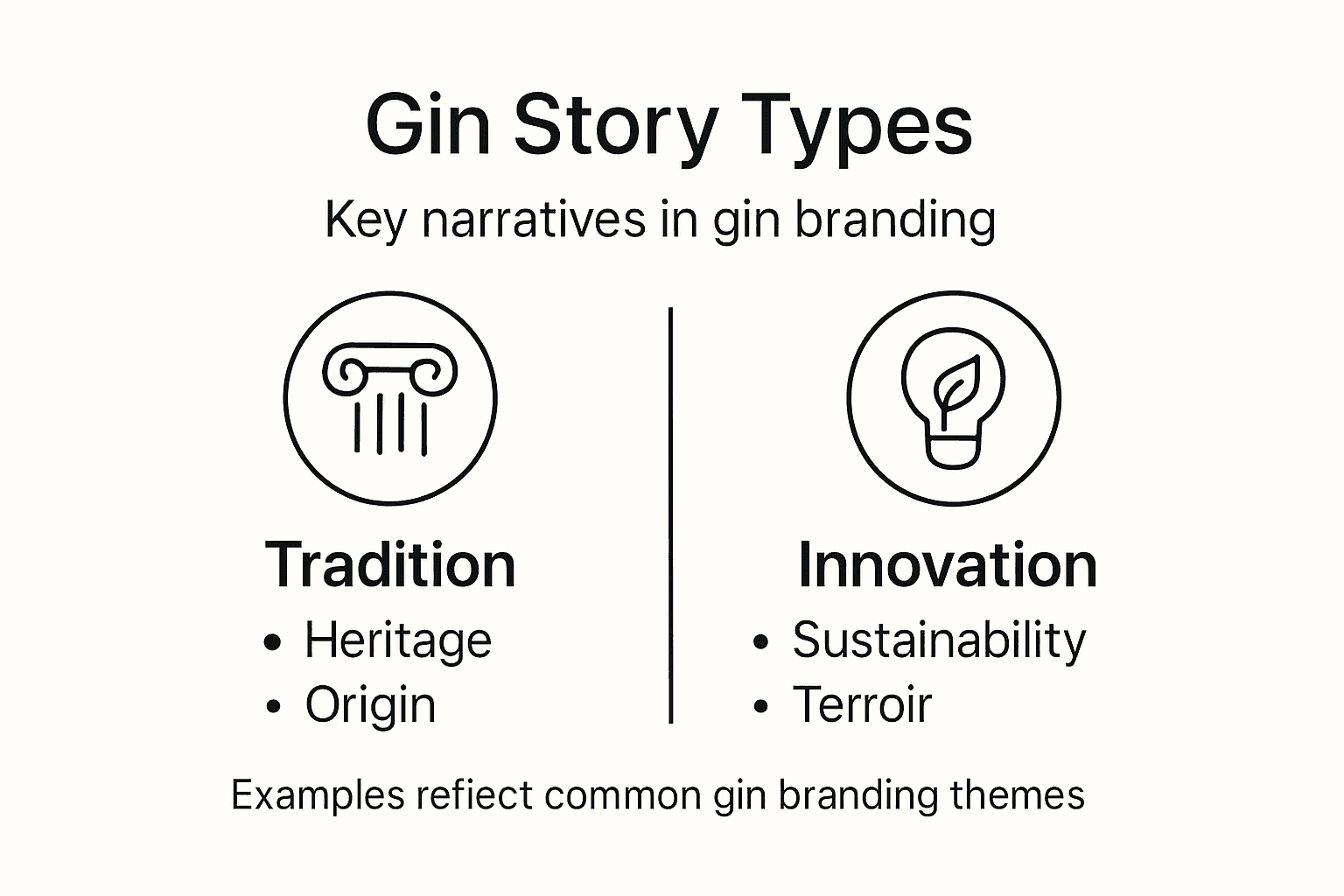
Heritage and tradition narratives emphasize authenticity through historical continuity. These stories reference centuries-old distilling methods, family legacies spanning generations, or geographic regions famous for gin production. A brand using this narrative might highlight how their recipe remains unchanged since 1847 or how their distillery sits on land their family has owned for 200 years. This approach positions gin as a trustworthy constant in a changing world. The story tells consumers they’re purchasing not just a product but a piece of living history. Conversely, innovation and experimentation narratives position gin as forward-thinking and contemporary. These brands highlight unusual botanical combinations, modern distillation techniques, or experimental aging processes. They appeal to adventurous consumers who view gin as an evolving category rather than a static tradition. Understanding the different gin styles available helps illustrate how brands use innovation narratives to carve out unique market positions.
Provenance and terroir narratives ground the story in geographic specificity and local ingredients. A Mediterranean gin brand might emphasize locally sourced citrus, regional herbs, and the distinctive character that emerges from a particular landscape. This narrative appeals to consumers seeking connection to place and understanding of how geography shapes flavor. Similarly, lifestyle and aspiration narratives create emotional and self-expressive benefits disconnected from production details. These stories evoke glamour, sophistication, or exclusivity. A gin might present itself as the spirit of coastal elegance or refined urban living, positioning consumption as a lifestyle choice that communicates something about the drinker’s values and identity.
Sustainability and social responsibility narratives have grown increasingly prominent. Brands highlight ethical sourcing, environmental stewardship, or community impact. This narrative type appeals to consumers whose values extend beyond flavor to encompass broader concerns about production ethics. Many contemporary gin brands combine multiple narrative themes simultaneously, weaving together heritage with sustainability, or innovation with provenance. The strongest brands don’t rely on a single story but instead layer complementary narratives that create depth and resonance with diverse segments of their audience.
Here’s how different gin brand story types appeal to consumers:
| Narrative Type | Core Appeal | Typical Consumer | Key Differentiator |
|---|---|---|---|
| Heritage & Tradition | Authenticity and legacy | History lovers | Multi-generation recipes |
| Innovation & Experimentation | Novel flavors and trends | Adventurous drinkers | Unusual botanicals |
| Provenance & Terroir | Sense of place | Locavores, travelers | Regional ingredients emphasis |
| Lifestyle & Aspiration | Image and prestige | Urban trendsetters | Sophisticated branding |
| Sustainability & Responsibility | Ethics and social good | Values-driven buyers | Eco-friendly sourcing |
Pro tip: Identify which narrative type genuinely aligns with your own values as a gin drinker. Do you gravitate toward heritage brands that tell centuries-old stories, or does innovation and experimentation excite you more? Your preference often reveals which gin narratives will most successfully engage you.
How Gin Stories Influence Consumer Perception
What you believe about a gin before you taste it shapes how you experience it. This phenomenon goes beyond simple marketing psychology. Gin stories create mental frameworks that literally alter how your brain processes sensory information. When you know the story behind a gin, you taste it differently. You notice details you might otherwise miss. You become more forgiving of unconventional flavor notes. You feel more connected to the experience. This is how narratives influence perception at a neurological level.
Brand authenticity and trust emerge directly from the story. A gin story positions the brand as either trustworthy or questionable based on narrative consistency and specificity. When a brand tells you precisely where their botanicals come from, how long they’ve been distilling, and what makes their process distinctive, you perceive greater authenticity. Vague claims about “premium quality” trigger skepticism. Detailed narratives about production methods, botanical sourcing timelines, and family heritage trigger confidence. Gin stories shape perception by communicating authenticity and craftsmanship through every interaction point, from packaging design to marketing materials. This framing directly impacts whether consumers see your gin as worth a premium price or as an overpriced commodity.
Sensory expectations are primed by narrative. Your brain doesn’t experience flavor in isolation. It anticipates flavor based on what you’ve heard about a product. A gin presented as “floral and delicate” triggers different taste receptors and attention than the same gin presented as “bold and herbaceous.” The story creates a sensory journey that consumers consciously follow as they drink. A Mediterranean gin narrative encourages you to seek citrus notes and warm spice. A heritage narrative encourages you to find complexity and refinement. The story tells your brain what to look for, what to appreciate, and what to overlook. This explains why the same gin can receive dramatically different tasting notes depending on its marketing context.
Quality perception jumps when the story is compelling. Consumers consistently rate identical products higher when they know a rich narrative behind them. A gin with an elaborate story about family distilling traditions, specific botanical selections, and regional significance receives higher quality scores than the same gin presented without context. Understanding gin culture helps explain why narrative matters so profoundly. When you perceive a gin as culturally significant and thoughtfully crafted, you literally taste it as better quality. Your expectations become self-fulfilling. You forgive minor imperfections. You find depth rather than flaws. This perception translates directly to loyalty and willingness to pay premium prices.
Pro tip: Before buying a premium gin, read the brand story with the same critical eye you’d apply to tasting notes. Does the narrative feel grounded in genuine practice, or does it rely on vague luxury language? Authentic stories typically include specific details about production, sourcing, and regional connection rather than generic superlatives.
Common Mistakes in Crafting Brand Stories
Many gin brands create narratives that fail to resonate because they ignore fundamental principles about how stories actually work. These mistakes are predictable, avoidable, and often fatal to brand positioning. Understanding what not to do is just as valuable as knowing what to do when constructing your gin narrative. The most successful brands recognize these pitfalls early and course-correct before their story becomes industry noise.
The first major mistake is leaning too heavily on generic craft narratives without differentiation. Countless gin brands tell essentially the same story: small-batch production, carefully selected botanicals, traditional methods, family heritage. These elements matter, but they’ve become predictable. When every gin brand emphasizes craft and provenance, none truly stands out. Consumers tune out repetitive narratives because they lack distinctive perspective. Your story needs fresh angles that competitors haven’t explored. Instead of simply stating you use traditional distillation, explain what specifically about your approach differs from industrial methods. Rather than mentioning botanicals generally, describe the precise sensory impact each botanical creates and why you rejected alternatives. The most common mistake is failing to align your story with actual product characteristics, which immediately undermines credibility. If your narrative emphasizes Mediterranean citrus but your gin tastes predominantly of juniper with barely detectable citrus, you’ve created dissonance. Consumers will feel deceived, and your story becomes a liability rather than an asset.
A second critical error is neglecting to research your target audience deeply. Generic stories appeal to nobody specifically. They’re written for some imaginary “gin drinker” rather than actual people with distinct values, preferences, and skepticism levels. A narrative crafted without audience research might emphasize sustainability and ethical sourcing to consumers who primarily care about flavor complexity and rarity. It might highlight innovation to heritage-focused enthusiasts who distrust experimental approaches. The story needs tailoring based on what genuinely matters to your specific audience. This requires actual research, not assumptions. Talk to your customers. Understand their motivations. Learn what narrative elements trigger trust versus skepticism. What story would they find compelling rather than marketing fluff?
Third, brands often make the mistake of prioritizing emotional appeal over authenticity. The glossiest, most emotionally resonant story fails if it doesn’t reflect reality. If you position your gin as artisanal but use industrial production methods, that contradiction will eventually surface and damage your brand permanently. If you emphasize family heritage but the brand was founded five years ago by a marketing consultant, savvy consumers will discover the truth. Your story must be grounded in genuine practices, real history, and actual product characteristics. The authenticity itself becomes your competitive advantage.
Below is a summary of common pitfalls and their consequences for gin brands:
| Mistake Type | Example | Consequence |
|---|---|---|
| Generic storytelling | Overused craft claims | Brand blends in with competitors |
| Ignoring audience | Vague sustainability focus | Disconnect with target buyers |
| Inauthentic narratives | False heritage claims | Loss of consumer trust |
Pro tip: Before finalizing your gin story, ask whether someone visiting your distillery would confirm every narrative claim within the first hour. If your story requires hiding aspects of your actual production or sourcing, it’s not grounded in authenticity.
Discover Authentic Gin Stories through Gin Niro
Every premium gin deserves a story that matches its exquisite craftsmanship and unique profile. The challenge many enthusiasts face is finding a gin that aligns with authentic botanical choices, traditional distillation methods, and a sincere heritage narrative. Gin Niro embraces this challenge by combining zibibbo grapes and Sicilian citrus to create a truly Mediterranean gin that tells a genuine story through every sip. It is not just about flavor but about connecting with a rich artisanal legacy that sophisticated consumers seek.
Explore how Gin Niro stands apart by offering transparency in sourcing and production that reflects real passion and expertise. Experience the balance of heritage and innovation firsthand by visiting our Homepage – Gin Niro to learn more about the artisanal process and sensory experience behind each 70cl bottle.
Elevate your gin experience now and choose a brand with a story worth savoring. Visit https://ginniro.it to discover Gin Niro’s unique narrative and order your bottle today. Your journey into authentic Mediterranean gin begins here.
Frequently Asked Questions
What is a gin story?
A gin story is the brand narrative that defines a gin producer’s identity, encompassing historical roots, botanical selections, cultural connections, and innovations that make the gin unique.
Why are gin stories important for branding?
Gin stories create emotional resonance with consumers, allowing them to connect with the brand on a deeper level, which can justify premium pricing and build consumer loyalty.
How can a compelling gin story influence consumer perceptions?
A compelling gin story shapes the way consumers perceive flavor and quality, enhancing their overall experience and encouraging them to engage more deeply with the product.
What key elements should be included in a gin story?
Key elements of a gin story include botanical authenticity, origin transparency, visual identity, sensory experience, heritage balance with innovation, and a commitment to production practices that resonate with consumers.


