

Selecting a truly exceptional gin starts long before your first sip. For discerning gin connoisseurs and Mediterranean spirit lovers, ingredient origin and distillation craft set premium bottles apart from the rest. When botanicals like Italian juniper or Moroccan coriander are carefully sourced and expertly distilled, the result is a gin where every aroma and flavor tells a story of place. This guide helps you spot quality management of gin and savor complexity worth seeking out.
Table of Contents
- Step 1: Assess Ingredient Quality and Origin
- Step 2: Evaluate Distillation Methods and Craftsmanship
- Step 3: Analyze Unique Flavor Profiles and Aromas
- Step 4: Verify Authenticity and Artisanal Credentials
- Step 5: Test for Sensory Excellence
Quick Summary
| Essential Insight | Detailed Explanation |
|---|---|
| 1. Source Quality Botanicals | Understand where botany comes from; specific regions yield unique flavors. Always inquire about the origins of ingredients. |
| 2. Evaluate Distillation Methods | Different distillation approaches impact the complexity of gin. Traditional redistillation can enhance flavor layers. |
| 3. Analyze Flavor Cohesion | Premium gins should harmoniously integrate botanicals. Disjointed flavors indicate lower quality. Taste side by side for comparison. |
| 4. Confirm Authenticity and Transparency | Genuine producers provide detailed information on sourcing and methods. Verify their certifications and documentation for authenticity. |
| 5. Use Systematic Tasting Techniques | Implement a structured approach to tasting, noting clarity, aroma, and flavor. This helps objectively evaluate the quality of gins. |
Step 1: Assess Ingredient Quality and Origin
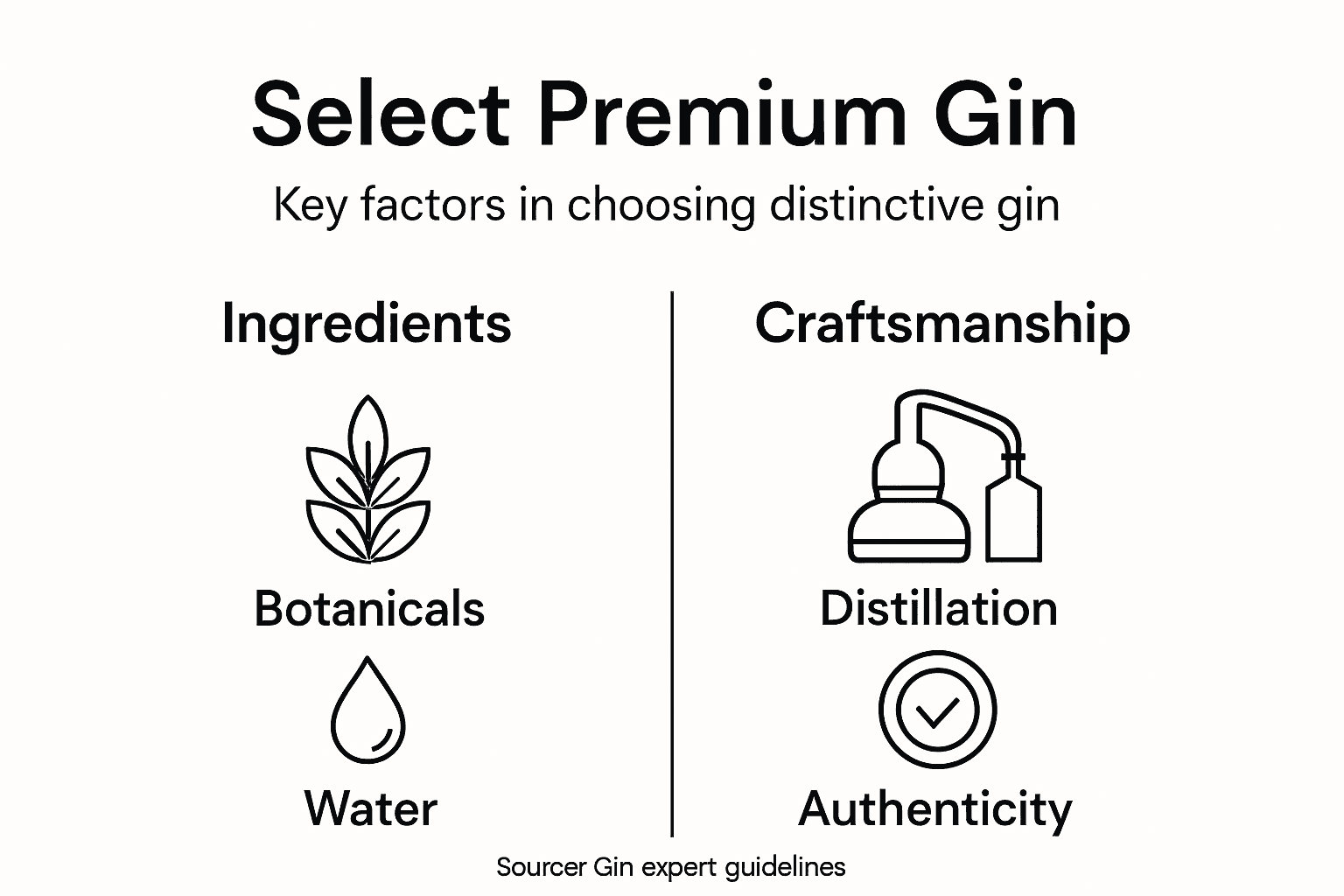
You’re looking at three pillars of gin quality: botanicals, neutral alcohol, and water. Each one matters deeply. The botanicals deliver your gin’s character, so understanding where they come from and how they’re evaluated is your first real step toward finding something exceptional.
Start by examining the botanicals themselves. Juniper berries, coriander seeds, angelica roots—these aren’t commodity items that come from anywhere. Quality distillers source them from specific regions known for excellence like Italy, Morocco, and central Europe. Ask your gin producer where their juniper comes from. Better yet, taste side by side with gins that specify their origins versus those that don’t. You’ll notice the difference immediately. Different geographic origins affect volatile compound profiles in the final spirit, creating variations in sensory experience that serious enthusiasts can identify.
When evaluating botanicals, distillers assess moisture and oil content because these directly influence flavor consistency. Climate matters. A juniper berry grown in Alpine conditions develops differently than one from Mediterranean slopes. This isn’t just trivia—it’s why you taste distinct differences between premium gins. Ask producers about their sourcing practices. Do they test their botanicals? Do they adjust for seasonal variations? These questions separate craftspeople from mass producers.
Next, understand the neutral alcohol base. It must be pure and truly neutral so your botanicals can shine without interference. Unlike whiskey or brandy, gin’s alcohol shouldn’t impart flavor of its own. This seems simple but matters profoundly. Substandard neutral alcohol masks botanical character instead of showcasing it. Finally, water quality affects your gin’s finish. Even slightly off water can dull the complexity you’re paying for.
Look for transparency in ingredient sourcing. Premium producers publish this information or provide it upon request. Mediterranean gin makers especially understand this—their reputation depends on honest sourcing and traditional methods.
Tip Request tasting notes that specify botanical origins, then taste multiple gins from different source regions to recognize how geography shapes flavor profiles and complexity.
Step 2: Evaluate Distillation Methods and Craftsmanship
Distillation method separates premium gin from ordinary spirits. This is where the real magic happens, and understanding what happens in the still directly shapes your selection. The technique used determines whether you get a gin that tastes flat or one with remarkable depth and complexity.
Traditional redistillation with botanicals creates intricate flavor profiles. When distillers redistill grain alcohol in the presence of juniper, coriander, and other botanicals, they’re building layers of volatile and nonvolatile compounds that define the final spirit. This isn’t accidental. Skilled craftspeople carefully balance these chemical components through precise temperature control and timing. Ask producers about their distillation approach. Do they use multiple distillations? Do they redistill with botanicals? These methods take longer but deliver noticeably superior results.
Modern innovations matter too. Advances like vacuum distillation technology preserve delicate volatile compounds from botanicals that traditional methods might lose to heat damage. Some distillers combine traditional approaches with modern equipment, achieving complexity while maintaining botanical integrity. Neither old nor new is inherently better. What matters is whether the method serves the botanicals and creates complexity in the glass.
Craftsmanship shows through consistency and intentionality. When you taste a premium gin repeatedly, it should taste the same every batch. This consistency comes from disciplined distillers who understand their equipment intimately and adjust for seasonal botanical variations. They know exactly when their still reaches the right temperature, which fraction of the distillate to keep, and how long to let botanicals macerate. These aren’t guesses.
Look for transparency about distillation specifics. Producers who explain their methods confidently typically stand behind their work. Mediterranean gin makers especially value traditional craft techniques that honor their regional heritage while producing exceptional spirits.
Tip Request specific details about distillation cycles and botanical infusion timing, then compare how these techniques differ between gins you’re considering to understand how method directly influences aroma and mouthfeel.
Step 3: Analyze Unique Flavor Profiles and Aromas
Your palate is the ultimate judge. This step teaches you how to taste gin like someone who actually understands what you’re experiencing. You’ll move beyond “I like it” to understanding why a particular gin resonates with your preferences and sensory expectations.
Start by assessing flavor cohesion. In premium gins, botanicals work together harmoniously instead of competing. One flavor never overwhelms the others. When you taste, notice whether juniper plays nicely with citrus, whether spice notes complement rather than clash with floral elements. Disjointed flavors signal lower quality. The best gins feel integrated, as if each botanical knew its role from the distillery floor.

Intensity matters equally. A gin with too many botanicals screams at your palate, while underdosed gin whispers so quietly you wonder if anything is there. The sweet spot exists where you taste every element without any single note drowning out the rest. Pour two gins side by side and taste them in sequence. Notice how one might feel balanced while the other feels either thin or overpowering. This comparison sharpens your ability to identify proper dosage.
Flavor sequencing creates the journey. Premium gins unfold from your first sip through to the finish. That progression matters tremendously. Aroma compounds like monoterpenes and sesquiterpenes contribute citrus, pine, floral, and spicy notes that should evolve as the spirit moves across your palate. You might taste bright citrus upfront, then experience floral complexity in the middle, finishing with warm spice. This dynamic movement separates memorable gins from forgettable ones.
Pay attention to how botanicals integrate with the alcohol base. In poorly made gins, you taste the spirit first and botanicals second. In premium versions, they meld completely, creating one unified sensory experience rather than separate layers. Take your time with each tasting. Let the gin warm slightly in your mouth before swallowing, allowing volatile compounds to fully express themselves.
Tip Taste multiple premium gins back to back, taking notes on specific flavor progression and which aroma characteristics appear at different stages of the tasting to develop your sensory memory.
Step 4: Verify Authenticity and Artisanal Credentials
Authenticity matters when you’re investing in premium gin. Countless products claim artisanal status while cutting corners or misleading consumers. This step shows you how to separate genuine craft producers from marketing hype.
Start by examining transparency in production methods. Real artisanal producers gladly explain their process. They tell you where botanicals come from, how long maceration takes, which distillation technique they use, and why they chose it. If a producer dodges these questions or provides vague answers, that signals a problem. Premium makers take pride in their methods and document them carefully. Mediterranean gin producers especially value this transparency as part of their heritage and brand identity.
Check for ingredient traceability. Premium gins include detailed information about botanical origins and sourcing practices. Certification and ingredient traceability demonstrate commitment to quality management standards. Ask whether botanicals are tested for purity and consistency. Legitimate producers maintain relationships with specific suppliers and can discuss their sourcing decisions confidently. Mass produced gins rarely offer this level of detail because their supply chains are too complex and cost driven.
Verify compliance with regulatory standards. Gin must meet specific legal definitions, including minimum alcohol volume and botanical content requirements under EU regulations and other international standards. Authentication through chemical analysis confirms that products adhere to these standards and contain what they claim. Look for certification marks, quality seals, or documented compliance on packaging or producer websites.
Small batch distillation signals authentic craftsmanship. Mass production uses enormous stills and industrial processes that prioritize volume over quality. Artisanal producers work in smaller batches, allowing greater control over temperature, timing, and ingredient integration. Ask about batch sizes and production volumes. Real craft gins typically produce limited quantities annually.
Here’s a concise comparison of artisan versus mass-produced gin sourcing and production approaches:
| Aspect | Artisan Producers | Mass Producers |
|---|---|---|
| Botanical Sourcing | Specific regions, tested | Commodity suppliers, bulk |
| Transparency | Detailed documentation | Limited or vague info |
| Batch Size | Small, carefully managed | Large-scale, industrial |
| Flavor Consistency | High, batch-to-batch | Variable, less refined |
Final verification comes from reputation and consistency. Research what gin enthusiasts and critics say about a producer. Check tasting notes from reputable sources. Purchase a bottle and taste it yourself. Authentic artisanal gins maintain consistent quality across batches because they care about reputation above profit margins.
Tip Request a producer’s quality certifications and botanical sourcing documents before purchasing, then verify claims against EU gin regulations to confirm authentic artisanal status.
Step 5: Test for Sensory Excellence
Sensory testing separates your personal preference from objective quality assessment. This step teaches you to evaluate gin using the same framework that premium producers and quality control teams employ.
Begin with systematic tasting methodology. Pour small amounts of gin into clear glasses so you can observe color and clarity first. Premium gins should appear bright and transparent without cloudiness or particles. Then bring the glass to your nose and inhale gently. What aromas emerge immediately? Notice citrus, pine, floral, or spice notes. This initial aroma assessment establishes your baseline before tasting.
Now evaluate flavor cohesion. Take a small sip and hold it briefly in your mouth without swallowing. Ask yourself whether botanicals blend harmoniously or clash. Does juniper work well with coriander? Do florals complement citrus? Sensory analysis in quality control uses trained panels to assess these elements scientifically, and you can apply similar thinking to your personal tastings. Disharmonious flavors indicate lower craftsmanship, while balanced botanicals signal premium production.
Assess intensity next. Is the flavor bold and pronounced, or subtle and restrained? Neither extreme is inherently wrong, but premium gins should offer enough presence that you taste every botanical without overwhelming your palate. Compare multiple gins at this stage. Notice how one might feel delicate while another feels robust. This comparison reveals how different producers balance their botanical recipes.
Focus on flavor sequencing and spirit integration. Premium gins progress from your first sip through the finish with evolving complexity. The alcohol should disappear into the botanical experience rather than asserting itself. Notice whether flavors change as the gin warms in your mouth, whether new notes emerge in the middle, and how the finish develops. This journey transforms tasting from passive consumption into active sensory discovery.
Mouthfeel deserves attention too. Does the gin feel silky, warming, or crisp? Premium versions demonstrate sophistication in texture alongside flavor. Record your observations for each gin you taste. After trying several, patterns emerge showing which producers deliver sensory excellence consistently.
Use this tasting matrix to help systematically evaluate premium gin qualities:
| Attribute | What To Observe | What Indicates Excellence |
|---|---|---|
| Appearance | Clarity, brightness | No cloudiness, pure brilliance |
| Aroma | Citrus, spice, floral | Distinct, layered, harmonious |
| Integration | Botanical and spirit blend | Seamless, unified experience |
| Mouthfeel | Texture in mouth | Silky, complex, balanced |
Tip Taste gins at consistent room temperature in clear glasses, taking written notes on aroma, flavor cohesion, intensity, and finish progression to develop an objective evaluation framework you can apply across different bottles.
Discover the Art of Choosing Premium Gin with Gin Niro
Selecting a premium gin that delivers a distinctive sensory experience can be challenging. From assessing botanical quality and authentic distillation methods to savoring balanced flavors and aromas, you want a gin that truly speaks to craftsmanship and tradition. If you have ever wondered how geography influences botanical profiles or how artisanal distillation transforms flavor complexity, then Gin Niro offers a unique solution rooted in Mediterranean heritage. This artisanal gin features carefully sourced ingredients like zibibbo grapes and Sicilian citrus, combined through traditional methods that honor genuine quality and sensory excellence.
Explore the exceptional qualities of Gin Niro on our Homepage 6 Gin Niro, where transparency, craftsmanship, and regional authenticity come together. Dont settle for mass-produced spirits when you can taste the harmony of carefully selected botanicals integrated perfectly with a neutral spirit base. Visit https://ginniro.it today to elevate your gin experience and bring Mediterranean artisanal craftsmanship to your glass. Take the next step in recognizing and enjoying true premium gin now.
Frequently Asked Questions
How do I assess the quality of gin botanicals?
To assess the quality of gin botanicals, inquire about their origins and how they are evaluated by the producer. Look for specific sourcing from regions known for excellence, and consider doing side-by-side tastings to identify differences in flavor profiles.
What distillation methods should I look for in premium gin?
Look for traditional redistillation techniques that incorporate botanicals during the process, as these generally produce more complex flavors. Ask producers about their distillation cycles and whether they use multiple distillations to ensure a more refined final product.
How can I evaluate the flavor profiles of different gins?
Evaluate flavor profiles by tasting multiple gins side by side and paying attention to how well the botanicals work together. Observe whether the flavors are cohesive and balanced, and note the intensity and progression of flavors from the initial sip to the finish.
What signs indicate that a gin is truly artisanal?
Authentic artisanal gin producers provide transparency about their production methods and the sourcing of their botanicals. Look for small batch production, detailed documentation, and a commitment to quality over volume to verify that a gin is genuinely artisanal.
How do I conduct a sensory evaluation of gin?
To conduct a sensory evaluation, observe the gin’s appearance, aroma, flavor integration, and mouthfeel systematically. Pour the gin into clear glasses to assess clarity, take notes on the aromas, and evaluate how well the flavors meld together in your mouth.
Why is water quality important in premium gin production?
Water quality is crucial because even slightly off water can dull the complexity of the flavors in gin. Look for producers who are transparent about their water source and quality, as this can significantly impact the final product’s overall character.

