

Bold assumptions about gin often mask the spirit’s true craft and roots. For those who savor the complexity of Mediterranean botanicals and the finesse of small-batch distillation, understanding the foundation of artisanal gin brings each sip to life. From juniper’s essential role to the subtle artistry behind terms like ‘London Dry’, this exploration clears up stubborn myths and reveals the craftsmanship and tradition that define genuine artisanal gin.
Table of Contents
- Defining Artisanal Gin And Common Myths
- Distinct Ingredients In Mediterranean-Style Gin
- Traditional Distillation Methods Explained
- How Artisanal Gin Differs From Mass-Market Options
- Risks And Challenges In Craft Gin Production
Key Takeaways
| Point | Details |
|---|---|
| Artisanal Gin Characteristics | Artisanal gin is defined by juniper dominance, handcrafted production, unique botanical profiles, and local ingredient sourcing. |
| Mediterranean vs. London Dry Gin | Mediterranean gins emphasize herbal and citrus botanicals, while London Dry gins focus on juniper-forward flavors. |
| Distillation Techniques | Two main methods, steep and boil, and vapor infusion, create distinct flavor profiles in gin. |
| Challenges in Production | Artisanal gin producers face quality control, regulatory compliance, and scaling challenges that require a balance of creativity and technical precision. |
Defining Artisanal Gin and Common Myths
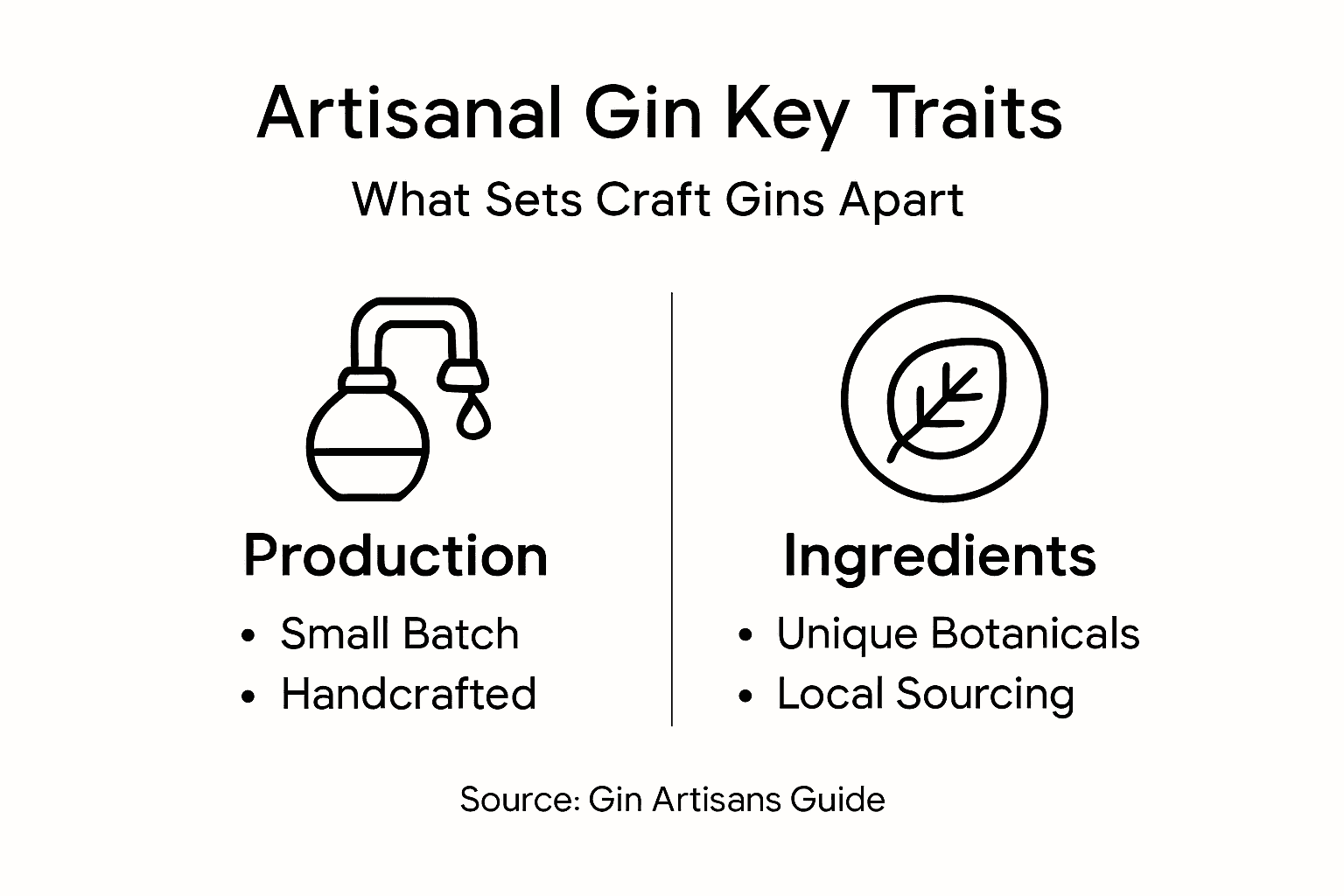
Artisanal gin represents a nuanced craft spirit category steeped in rich tradition and innovative techniques. Understanding what truly defines an artisanal gin requires debunking several persistent myths about its production, origins, and characteristics.
Contrary to popular belief, gin did not originate in England but emerged in the 1500s in Holland as genever, a juniper-based spirit. Common gin myths persist about its production methods and essential qualities. The core definition of artisanal gin centers around several key principles:
- Juniper Dominance: The primary botanical must be juniper berries
- Handcrafted Production: Small-batch distillation methods
- Unique Botanical Profiles: Intentional ingredient selection
- Local or Specialized Ingredient Sourcing: Regional botanical integration
Many misconceptions surround the term ‘London Dry’, which actually describes a production style rather than a geographic requirement. Gin offers diverse botanical profiles that extend far beyond the stereotypical pine-like juniper flavor, challenging traditional perceptions about the spirit.
True artisanal gin distinguishes itself through meticulous craftsmanship, innovative botanical combinations, and a commitment to quality that transcends mass production techniques. Distillers often incorporate local ingredients, experimental techniques, and precise distillation methods to create unique expressions that reflect their regional heritage and personal creative vision.
Pro tip: When exploring artisanal gins, focus on the complexity of botanical blends and the story behind the distillation process rather than relying on conventional assumptions about the spirit.
Distinct Ingredients in Mediterranean-Style Gin
Mediterranean-style gins represent a remarkable fusion of regional botanicals and time-honored distillation traditions, creating spirits that capture the essence of their geographic origins. Mediterranean gins distinguish themselves through an extraordinary array of locally sourced ingredients that transform the classic gin profile.
The botanical composition of Mediterranean gins is truly exceptional, featuring a diverse range of native herbs and fruits that reflect the region’s rich agricultural landscape:
- Aromatic Herbs: Rosemary, thyme, and basil
- Citrus Elements: Lemons, oranges, and local Mediterranean citrus varieties
- Unique Botanicals: Olives, particularly Arbequina varieties
- Regional Spices: Oregano, sage, and wild fennel
Traditional distillation methods play a critical role in developing these complex flavor profiles. Spanish and Mediterranean gin producers utilize long maceration times and carefully selected fermentation techniques that enhance the spirit’s aromatic depth. This approach allows each botanical to contribute its unique character, creating a nuanced drinking experience that goes far beyond conventional gin styles.
The terroir of the Mediterranean region significantly influences these gins, with each ingredient telling a story of its specific microclimate and cultivation method. Distillers carefully select botanicals that represent the landscape’s biodiversity, transforming local agricultural traditions into an exceptional spirit that celebrates regional identity.
Pro tip: When exploring Mediterranean-style gins, pay attention to the specific botanical combinations and look for bottles that highlight their regional ingredient sourcing.
Here’s how Mediterranean and classic London Dry gins differ in key aspects:
| Aspect | Mediterranean Gin | London Dry Gin |
|---|---|---|
| Botanical Focus | Herbal and citrus-heavy | Juniper-forward flavors |
| Regional Identity | Strong ties to the Mediterranean | Not linked to London region |
| Typical Ingredients | Olives, rosemary, local citrus | Juniper, coriander, angelica root |
| Flavor Profile | Bright, herbal, nuanced | Crisp, dry, pine-like finish |
| Distillation Approach | Emphasizes local ingredients | Follows traditional recipes |
Traditional Distillation Methods Explained
Gin distillation is a nuanced craft that transforms simple ingredients into complex spirits through carefully orchestrated techniques. Traditional gin production involves precise botanical extraction methods that separate exceptional gins from mass-produced alternatives.
Artisanal distillers typically employ two primary botanical infusion techniques:
-
Steep and Boil Method
- Botanicals macerated directly in neutral spirit
- Allows deep flavor extraction
- Produces robust, intense flavor profiles
-
Vapor Infusion Technique
- Botanicals suspended in basket above heating spirit
- Alcohol vapor passes through ingredients
- Creates more delicate, subtle flavor notes
Batch distillation techniques offer artisan distillers unprecedented control over flavor development. Each distillation run becomes a carefully choreographed process where temperature, timing, and botanical selection determine the final spirit’s character. Professional distillers make critical decisions about which fraction of the distillation run to preserve, discarding harsh initial and final spirits to capture only the most refined middle section.
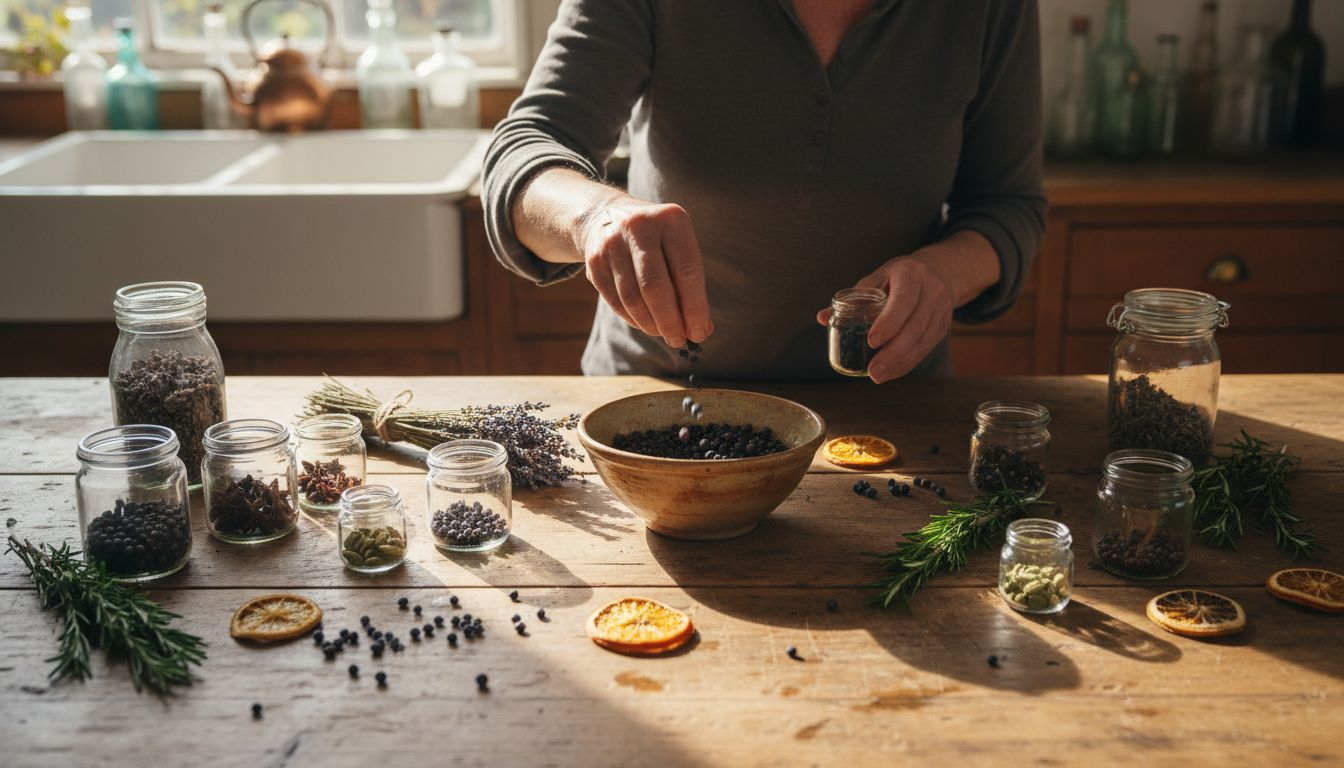
The selection of a high-quality neutral base spirit serves as the foundational canvas for these intricate botanical combinations. Master distillers meticulously balance ingredients, understanding that each botanical contributes subtle nuances that transform a simple spirit into an extraordinary sensory experience.
Pro tip: When sampling artisanal gins, pay attention to the subtle flavor transitions and complexity that result from these sophisticated distillation methods.
See how the two main distillation methods shape the final gin:
| Distillation Method | Flavor Result | Process Control |
|---|---|---|
| Steep and Boil | Intense, rich, robust | Requires careful timing |
| Vapor Infusion | Delicate, subtle, floral | Allows fine flavor tuning |
How Artisanal Gin Differs From Mass-Market Options
Artisanal gin represents a radical departure from mass-produced spirits, embodying a philosophy of craftsmanship that transcends industrial manufacturing. Craft gin production emphasizes unique flavor complexity through meticulous ingredient selection and traditional production methods.
Key differences between artisanal and mass-market gin include:
-
Production Scale
- Artisanal: Small batch, limited quantities
- Mass-Market: Large industrial production
-
Ingredient Quality
- Artisanal: Locally sourced, premium botanicals
- Mass-Market: Standardized, often synthetic ingredients
-
Flavor Profile
- Artisanal: Complex, nuanced taste experiences
- Mass-Market: Uniform, predictable flavor
Artisanal distillers prioritize authenticity and community connection, transforming gin production from a purely commercial endeavor into a narrative-driven craft. These passionate producers invest significant time in developing unique botanical blends, experimenting with local ingredients, and creating spirits that tell a distinctive regional story.
The commitment to craftsmanship extends beyond mere production techniques. Artisanal gin makers view each bottle as a representation of their cultural heritage, personal creativity, and dedication to preserving traditional distillation methods. This approach creates a profound difference between mass-produced spirits and carefully crafted gin that speaks to discerning consumers seeking genuine, high-quality experiences.
Pro tip: When selecting gin, look beyond price and packaging to understand the story and production method behind each bottle.
Risks and Challenges in Craft Gin Production
Craft gin production represents a delicate balance between artistic vision and rigorous technical requirements. Producers face significant operational challenges that test their commitment to quality and innovation.
Primary challenges confronting artisanal gin producers include:
-
Quality Control
- Ensuring consistent botanical quality
- Managing ingredient sourcing variability
- Maintaining precise flavor profiles
-
Regulatory Compliance
- Meeting strict safety standards
- Navigating complex alcohol production regulations
- Obtaining necessary production permits
-
Production Scaling
- Maintaining artisanal techniques at larger volumes
- Managing increased operational complexity
- Preserving unique flavor characteristics
Traditional local gin production involves significant safety considerations that extend beyond simple manufacturing processes. Potential risks include contamination from raw materials, inconsistent distillation techniques, and potential health hazards associated with improper production methods.
Successful craft gin producers must develop robust systems that balance creative expression with scientific precision. This requires continuous investment in technology, training, and quality management systems that can adapt to the dynamic challenges of small-batch spirit production.
Pro tip: Invest in comprehensive quality control systems and stay current with evolving regulatory requirements to mitigate risks in craft gin production.
Discover the True Essence of Artisanal Gin with Gin Niro
The article highlights the challenges and rewards of crafting genuine artisanal gin, emphasizing handcrafted production, unique botanical blends, and traditional distillation methods. If you seek a gin that embodies these authentic qualities and celebrates Mediterranean heritage, Gin Niro is crafted just for you. With premium ingredients like zibibbo aromatic grapes and Sicilian citrus, coupled with meticulous artisanal techniques, it offers a sensory experience that transcends mass-market spirits.
Explore the compelling story behind Gin Niro and experience the complex flavor profile that only true craftsmanship can deliver. Visit the Homepage – Gin Niro to learn more and find your perfect bottle. Don’t miss the chance to elevate your gin collection with a spirit that honors tradition and innovation alike. Start your journey now at https://ginniro.it and savor the authentic taste of Mediterranean artistry.
Frequently Asked Questions
What defines artisanal gin?
Artisanal gin is defined by its juniper dominance, handcrafted production methods, unique botanical profiles, and the use of local or specialized ingredient sourcing. It emphasizes quality and small-batch distillation.
How does artisanal gin differ from mass-produced gin?
Artisanal gin differs from mass-produced versions in production scale, ingredient quality, and flavor profiles, offering complex and nuanced taste experiences compared to the uniformity of mass-market options.
What are the key ingredients in Mediterranean-style gin?
Mediterranean-style gin features a range of botanicals such as aromatic herbs (like rosemary and thyme), citrus elements (like lemons and oranges), unique botanicals (like olives), and regional spices (like oregano and wild fennel).
What challenges do artisanal gin producers face?
Artisanal gin producers face challenges including quality control, regulatory compliance, and production scaling, all of which require balancing creative expression with technical precision.


